Best processor for inference
Evaluate the best processors for AI inference. Compare CPU versus GPU performance, memory bandwidth limits, and datacenter hardware requirements for models.
In this article8
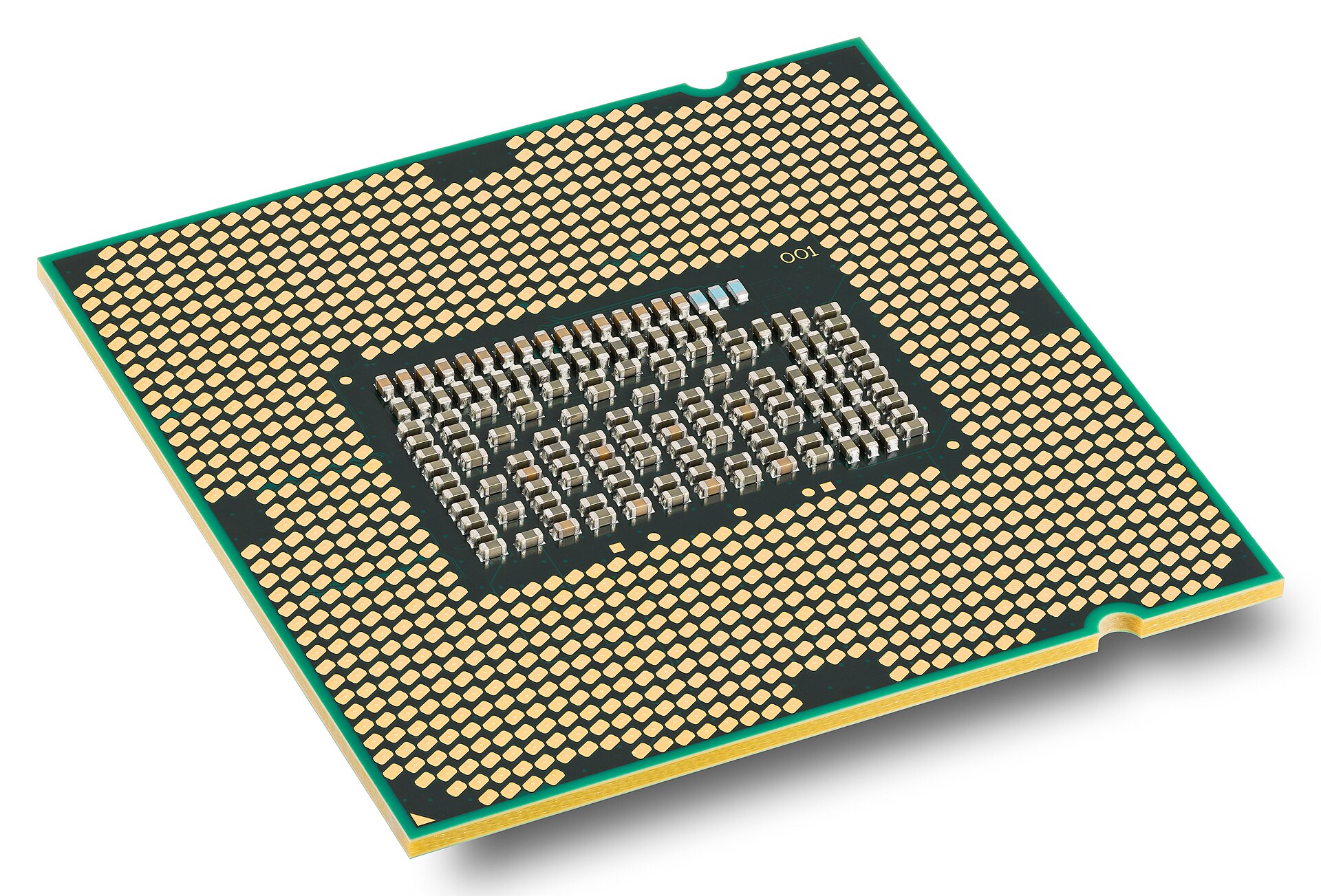
The split between CPU and GPU for AI inference
Selecting the best processor for artificial intelligence workloads requires distinguishing between compute paradigms. Graphics processing units (GPUs) are massively parallel processors engineered to maximize floating-point operations per second (FLOPS) across thousands of tensor cores. Central processing units (CPUs) prioritize single-threaded instruction latency, complex branching logic, and rapid cache access across a smaller pool of high-clock-rate cores. In standard transformer architectures, the prefill phase (processing prompt context) and decode phase (generating subsequent tokens) rely on dense matrix arithmetic that saturates GPU compute pipelines.
However, enterprise workloads increasingly operate as multi-step agentic workflows where language models execute external function calls, parse structured database schemas, and coordinate external APIs. In these multi-agent architectures, non-matrix operations dominate total processing time. Empirical measurements from distributed systems research show that CPU-side tool execution, serialization, and networking can account for up to 90.6% of total end-to-end latency in agentic workloads[1]. While raw model generation requires GPU parallelization, host server processors remain the primary bottleneck during intermediate orchestration steps.
| Architectural dimension | Central processing unit (CPU) | Graphics processing unit (GPU) |
|---|---|---|
| Parallel execution units | Up to 192 cores per socket on a current server part such as the AMD EPYC 9965, each running an independent instruction stream | 16,896 FP32 CUDA cores and 528 Tensor Cores across 132 streaming multiprocessors on an H100 SXM5 |
| Primary strength | Branch prediction, sequential control flow, low-latency API handling | Parallel matrix multiplication (GEMM) and tensor transformations |
| Memory architecture | High-capacity DDR5 channels (typically up to ~300 GB/s bandwidth) | High-bandwidth stacked memory (HBM3/HBM3e up to 4.8 TB/s or higher) |
| Workload fit | Agent tool routing, tokenization, Python interpretation, sub-1B models | Token generation, batched context processing, 7B+ parameter models |
Do I need a GPU for inference?
For any production deployment of a general-purpose language model, the answer is yes: the host CPU handles orchestration, tokenization, and tool execution, but generative token production belongs on an accelerator. The practical question for an executive is therefore not CPU versus GPU but how much accelerator capacity a given model class requires, and whether that capacity should be owned, reserved, or rented on demand.
A useful rule of thumb for platform decisions: the model's weights must sit in the memory attached to whichever processor runs them. A general-purpose server CPU addresses large pools of DDR5 system memory but supplies it comparatively slowly, while a datacenter accelerator pairs a smaller pool with stacked high-bandwidth memory. That difference is why the same model that feels interactive on an accelerator feels unusable on host silicon once it grows past a few billion parameters.
- Host CPU: sizes to the orchestration load, tool calls, request routing, tokenization, and data marshalling around the model.
- Accelerator: sizes to the model itself, its precision format, and the concurrency the service must sustain.
- Platform: determines whether that accelerator is bought outright, reserved, or provisioned on demand as a GPU virtual machine.
When a CPU outperforms a GPU for inference
While datacenter AI accelerators dominate large model deployments, modern multi-core server CPUs offer operational advantages for specialized, compact workloads. For small language models (SLMs) with parameter counts under 1.5 billion, the overhead of offloading computations across the PCIe bus and launching GPU kernels can exceed the execution time of the matrix operations themselves.
Empirical benchmarking on compact models highlights this threshold. In controlled on-device tests evaluating a 1-billion-parameter model via llama.cpp on an iPhone 15 Pro, a CPU-only setup running two threads at 16-bit precision achieved 17 tokens per second, surpassing the 12.8 tokens per second obtained with GPU acceleration[4]. This advantage emerges because optimized CPU runtime frameworks eliminate kernel dispatch latency and avoid host-to-device memory synchronization bottlenecks on smaller parameter tensors.
| Model size class | Recommended processor | Primary architectural rationale |
|---|---|---|
| Sub-1B parameters (e.g., 0.5B to 1B) | Server CPU (multi-threaded AVX-512 / AMX) | Kernel launch and transfer overhead on GPU exceeds compute duration; CPU-only execution reached 17 tokens per second on a 1B model versus 12.8 with GPU acceleration |
| 1B to 3B parameters | Hybrid CPU/GPU or entry accelerator | Balanced latency; CPU remains viable for low-concurrency edge inference |
| 7B+ parameters | Dedicated datacenter GPU (HBM-based) | Weights and KV cache are re-read for every generated token, which needs HBM bandwidth rather than host DDR5; requires an accelerator such as the 141 GB H200 |
Who makes the best AI inference chips?
The market for dedicated datacenter inference silicon is led by NVIDIA, AMD, and Intel, each addressing memory bandwidth and capacity through distinct architectural packaging. Evaluating the leading hardware requires analyzing memory capacity, memory technology, and interconnect throughput rather than marketing claims.
NVIDIA's Hopper generation, specifically the H200 SXM, integrates 141 GB of HBM3e memory delivering 4.8 TB/s of memory bandwidth[6]. AMD's Instinct MI300X counters with 192 GB of HBM3 memory and 5.3 TB/s of peak on-package throughput on a CDNA 3 chiplet design[7], the highest single-accelerator capacity of the three, which reduces how often a large model has to be partitioned across sockets. Intel's Gaudi 3 pairs 128 GB of HBM2e memory with two compute dies and 24 integrated 200 Gbps RDMA Ethernet ports[8], providing an alternative for cost-focused inference deployments.
| Accelerator model | Architecture | Memory capacity | Memory bandwidth | Primary deployment fit |
|---|---|---|---|---|
| NVIDIA H200 SXM | Hopper | 141 GB HBM3e | 4.8 TB/s | Low-latency generation on frontier foundation models |
| AMD Instinct MI300X | CDNA 3 | 192 GB HBM3 | 5.3 TB/s | Large parameter models (e.g., 70B) requiring high single-GPU capacity |
| Intel Gaudi 3 | Gaudi 3 | 128 GB HBM2e | 3.7 TB/s | Cost-optimized inference and integrated Ethernet cluster scale-out |
How model size defines VRAM requirements
Selecting datacenter inference silicon requires mapping the target model's parameter count and quantization format directly to accelerator video random-access memory (VRAM). Model weights occupy memory according to precision: a 16-bit floating point format (FP16 or BF16) requires 2 bytes per parameter, while an 8-bit format (FP8 or INT8) requires 1 byte per parameter, and a 4-bit format (INT4) requires 0.5 bytes per parameter.
Beyond baseline parameter storage, production serving needs additional headroom for dynamic key-value (KV) caches, activation tensors, and inference runtime buffers. For example, a 32-billion parameter model quantized to FP8 format requires 32 GB of memory for model weights alone. When including runtime cache allocations, this workload fits onto a single 48 GB accelerator such as the NVIDIA L40S, eliminating the cross-GPU communication overhead required when distributing models across multi-card clusters.
- 8B parameter model (FP16): Requires 16 GB base memory plus 4 GB KV cache, fitting onto a 24 GB to 48 GB accelerator.
- 32B parameter model (FP8): Requires 32 GB base memory plus 8 GB KV cache, serving efficiently on a single 48 GB L40S accelerator.
- 70B parameter model (FP8): Requires 70 GB base memory plus 16 GB KV cache, deploying onto an 80 GB A100/H100 or single 141 GB H200 accelerator.
- Large MoE models (e.g., 235B+ total parameters): Require multi-GPU configurations with high-speed interconnects to aggregate 160 GB to 384 GB of total VRAM.
Sourcing on-demand GPU virtual machines
Deploying medium and large-scale AI models in enterprise production requires dedicated datacenter GPU compute capable of sustaining terabyte-per-second memory bandwidth. While CPUs serve as orchestrators and tool executors in agentic pipelines, generative token decoding at scale demands dedicated accelerator hardware.
For teams deploying dedicated infrastructure, On-demand GPU VM provides on-demand GPU virtual machines configured for enterprise inference workloads. The platform provides direct access to L40S, A100, H100, and H200 accelerators, allowing engineering teams to match exact model parameter counts and quantization formats to verified hardware configurations without long-term provisioning commitments.
- NVIDIA L40S: Optimized for high-throughput inference on quantized models up to 32B parameters.
- NVIDIA A100 / H100: Established enterprise baselines for large-scale transformer serving and batch inference.
- NVIDIA H200: High-capacity 141 GB HBM3e accelerator engineered for memory-intensive frontier models and long-context processing.
Frequently asked questions
Can a CPU be used for AI inference?
Yes. For small language models under 1 billion parameters, a CPU-only configuration can exceed GPU performance by eliminating kernel launch and memory-transfer overheads, achieving 17 tokens per second in benchmarks.
Why is memory bandwidth important for AI inference?
During the decode phase of generative inference, the processor must read the entire model weight tensor from memory for every generated token. This makes memory bandwidth the primary bottleneck for inference speed, rather than raw computational throughput.
What is the difference between an NVIDIA L40S and an H100?
The NVIDIA H100 is a datacenter GPU built on the Hopper architecture with high-speed HBM3 memory. The L40S is based on the Ada Lovelace architecture and uses standard GDDR6 memory. The L40S handles 32 GB FP8 models effectively, while the H100 serves larger models with higher bandwidth.
How much VRAM is required for a 32-billion parameter model?
A 32-billion parameter model quantized to FP8 format requires 32 GB of VRAM. This memory footprint fits comfortably on a single 48 GB NVIDIA L40S GPU, avoiding the need for multi-GPU tensor parallel configurations.
What role do CPUs play in agentic AI workloads?
In agentic AI systems, models frequently execute tool calls, compile data, and interact with external APIs. Those steps run on the host CPU rather than the accelerator, so host processor performance governs the orchestration latency between model calls.
Sources
- thenewstack.io
- AMD EPYC 9005 Turin thomas-krenn.com
- NVIDIA Hopper Architecture In-Depth developer.nvidia.com
- Challenging GPU Dominance: When CPUs Outperform for On-Device LLM Inference arxiv.org
- NVIDIA H200 GPU nvidia.com
- ThinkSystem NVIDIA H200 141GB GPUs Product Guide lenovopress.lenovo.com
- ThinkSystem AMD MI300X 192GB 750W 8-GPU Board Product Guide lenovopress.lenovo.com
- Gaudi Architecture — Gaudi Documentation 1.24.0 documentation docs.habana.ai
Rankings and scores on Optinest cannot be bought — no commercial relationship changes how a provider is assessed. How we score
Questions this piece answers
Do I need a GPU for inference?
For any production deployment of a general-purpose language model, the answer is yes: the host CPU handles orchestration, tokenization, and tool execution, but generative token production belongs on an accelerator. The practical question for an executive is therefore not CPU versus GPU but how much accelerator capacity a given model class requires, and whether that capacity should be owned, reserved, or rented on demand.
Who makes the best AI inference chips?
The market for dedicated datacenter inference silicon is led by NVIDIA, AMD, and Intel, each addressing memory bandwidth and capacity through distinct architectural packaging. Evaluating the leading hardware requires analyzing memory capacity, memory technology, and interconnect throughput rather than marketing claims.
Related reading
All Processors →Intel Xeon for AI inference
Evaluate Intel Xeon for AI inference. Analyze AMX performance, memory bandwidth constraints, and alternative processors for host and standalone roles.

CPU vs GPU for AI inference: Architecture and performance
Compare CPU vs GPU architectures for AI inference. Learn how agentic workloads and small models change hardware requirements and latency budgets.

The H100 is no longer the top of the stack
Compare the successors to the NVIDIA H100. Evaluate the H200, B200, and B300 GPUs based on memory bandwidth, capacity, and inference performance.
