Europe's grid queue is now the build constraint
Track datacenter grid connection queue lengths across Europe. Discover why wait times stretch up to a decade and how to secure available AI capacity.
In this article8
- Grid connection queue length across Europe
- Grid connection queues in Germany and the UK
- Ireland's grid constraints and capacity planning
- Regulatory workarounds for connection queue lengths
- Commissioning AI infrastructure amid power constraints
- Bypassing the wait with available European capacity
- Frequently asked questions
- Sources
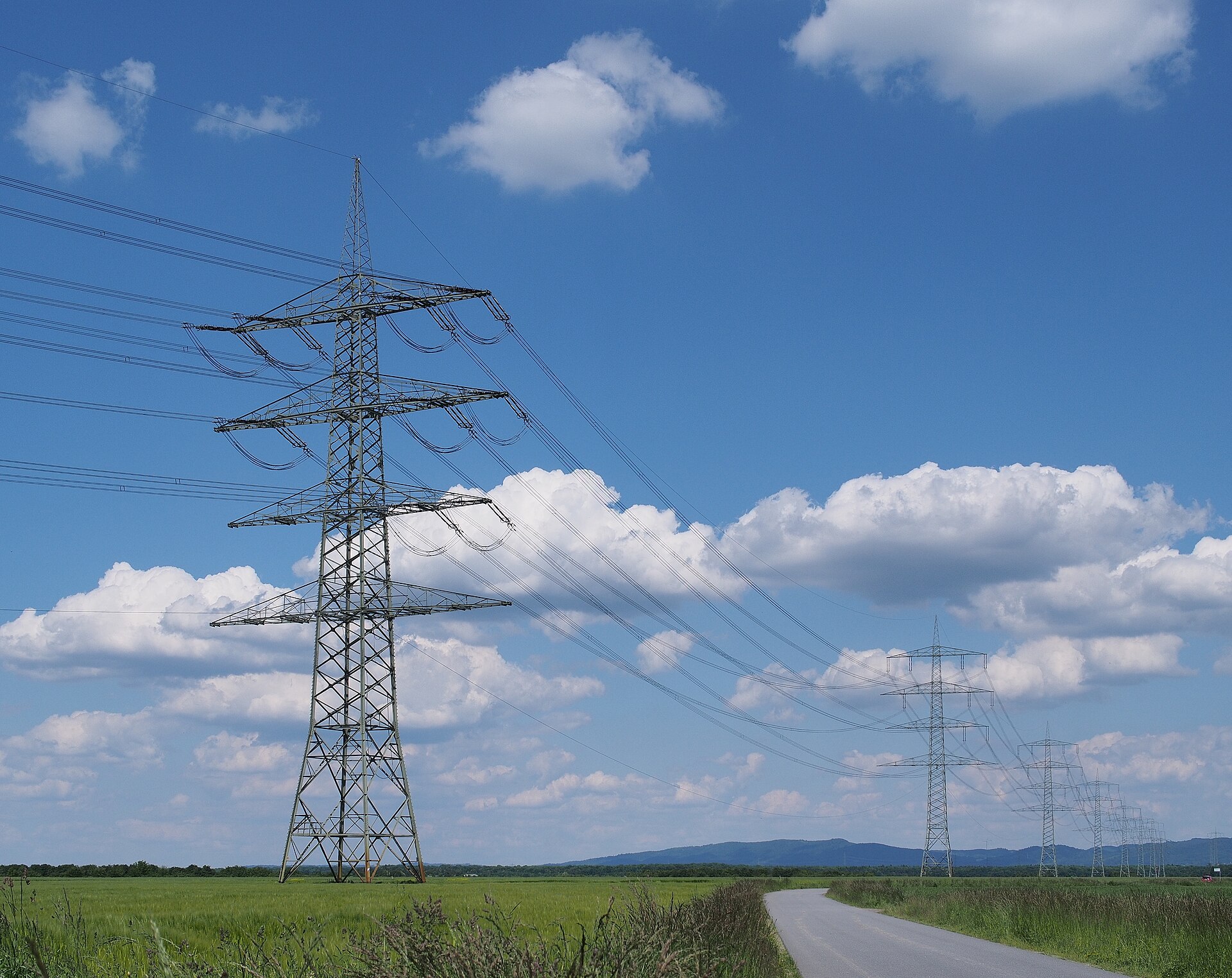
Grid connection queue length across Europe
Within the European Union, wait times for securing a grid connection for new datacenter facilities can range from two to ten years depending on the country, according to IEA analysis of electricity system constraints[1]. In the primary FLAP-D hubs (Frankfurt, London, Amsterdam, Paris, and Dublin), developers face queues to obtain a connection that average seven to ten years, with grid congestion cited as a major driver[1]. The delay reflects a fundamental mismatch in development velocity: a datacenter typically takes one to two years to build, while much longer lead times are needed to expand electricity infrastructure such as high-voltage lines, substations, and regional transformer capacity[1].
The rapid expansion of artificial intelligence workloads has accelerated this strain. According to International Energy Agency (IEA) analysis, the capacity implied by the announced European datacenter project pipeline is around 130% of installed capacity today[1]. However, transmission congestion and interconnection queues mean that installed capacity in Europe is projected to grow by just 70% by 2030 compared with 2024, in part because of delays and local grid constraints, leaving a substantial volume of planned capacity unbuilt or delayed[1].
| Region / Market | Average Connection Queue | Primary Constraint Factor | Grid Status |
|---|---|---|---|
| FLAP-D Tier-1 Hubs | Queues averaging 7 to 10 years (IEA) | Substation saturation and transmission bottlenecks | Highly constrained |
| United Kingdom | Lead times of about 5 to 10 years on average, some into the 2030s | Over-subscribed transmission queues and legacy speculative requests | Reformed queue / Gate system |
| Ireland (Greater Dublin) | Indefinite / Paused | Statutory capacity caps and gas-generation requirements | Restricted access |
| Nordics (Sweden, Finland) | Shorter than tier-1 hubs | Local distribution capacity despite abundant generation | Available with regional limits |
| Southern Europe (Spain) | Emerging queue | Transmission line extensions to renewable generation corridors | Emerging hub |
For infrastructure planners sizing future capacity, grid connection queues represent a hard physical constraint on regional compute deployment. IEA modelling expects datacenters to account for 10% of electricity demand growth in the European Union to 2030 under today's policy settings[1], intensifying competition for available substation capacity between digital infrastructure and the broader electrification of transport and industrial heating.
Grid connection queues in Germany and the UK
In Germany and the United Kingdom, transmission network congestion has concentrated around primary interconnection nodes. In Frankfurt, the largest datacenter cluster in continental Europe, municipal substation limits and high-voltage grid congestion have led local network operators to enforce stricter intake criteria, with connection dates for large power allocations regularly pushed into the 2030s. Transmission system operators in Germany must balance heavy industrial loads with renewable infeed from northern wind corridors, leaving limited spare high-voltage headroom in southern and central urban centers.
In the United Kingdom, the National Energy System Operator (NESO) implemented sweeping grid connection reforms to address massive backlog accumulation. Prior to the reforms, more than 700 GW of generation and storage projects sat in the connection queue[2]. As reported by Data Centre Dynamics, datacenters in the UK market currently face long lead times for connection, around five to ten years on average, with some projects facing connection dates as far into the future as the 2030s[2].
- NESO connection reforms placed approximately 217 GW of projects lacking consents, land rights, or clear progress into a preparatory Gate 1 tier, while retaining a 238 GW pipeline for development to 2035[2].
- More than 100 GW of large-scale demand projects, predominantly datacenters, remain in the UK development pipeline[2].
- Around 13 GW of firm transmission-connected demand can connect before 2030, with a further 86 GW slated for connection between 2030 and 2035[2].
- National Grid has said datacenters could account for up to nine percent of UK electricity demand, compared with 2.5 to 3 percent today[2].
These constraints are forcing developers evaluating European data centers to look outside saturated tier-1 nodes, shifting capacity expansion into secondary regions where substation capacity remains accessible.
Ireland's grid constraints and capacity planning
Ireland represents one of the most constrained electrical grids for digital infrastructure globally. EirGrid, Ireland's state-owned Transmission System Operator (TSO), operates the high-voltage transmission network and oversees national capacity allocation[3]. Under its 2026-2030 group strategy, the operator is investing in grid modernization, renewable integration, and interconnection to support growing demand and national decarbonization targets while maintaining system stability[4].
Despite planned transmission reinforcements, grid availability in the Greater Dublin Area remains under strict regulatory limits. The Commission for Regulation of Utilities (CRU) established criteria that effectively paused unmitigated grid connections for datacenters in the Dublin region unless applicants provide onsite dispatchable generation, battery energy storage systems (BESS), or direct off-grid power supply agreements. Datacenters in Ireland already account for an unprecedented share of national electricity consumption, creating acute operational challenges for the single electricity market.
- EirGrid's Group Strategy 2026 runs to 2030 and is built around pillars including "Building the Backbone" of the transmission network and "Unlocking New Frontiers" in offshore wind and interconnection, backed by an allocation of EUR 18.9 billion and 381 transmission projects[4].
- The same strategy commits the operator to connecting 9 GW of onshore wind and 5 GW of offshore wind as demand grows[4].
- Dublin-area connection requests require onsite dispatchable generation or storage to avoid exacerbating local peak demand deficits.
- Transmission queues for commercial facilities without dedicated energy backing remain effectively stalled across the East Coast region.
- New capacity development has decentralized toward regional nodes in the west and south, where local grid capacity allows for selective project intake.
For organizations sizing European infrastructure, Ireland illustrates how localized transmission bottlenecks can restrict an entire national market, turning connection queues into multi-year barriers regardless of facility capital investment.
Regulatory workarounds for connection queue lengths
Faced with multi-year queue lengths across the European Union, national governments and regulatory authorities are testing administrative and technical mechanisms to expedite grid connections. Alongside its European Grids Package, the European Commission reports that grid connection queues are present in at least 16 EU countries as of mid-2026, with some 120 GW of mature renewable projects at risk of not gaining timely grid access by 2030[5]. Its accompanying guidance on efficient and timely grid connections urges a shift from passive handling to a first-ready, first-served principle, with transparent maturity criteria, clear project milestones, and regular monitoring and cleaning of the connection queues[5].
In France, regulatory and energy authorities have explored policy measures to accelerate datacenter interconnection. These measures include streamlined permitting procedures and the use of dedicated underground cable connections to fast-track physical links between large-scale industrial projects and high-voltage transmission substations. By utilizing direct, privately financed underground links and clear readiness milestones, developers can circumvent intermediate distribution congestion points.
- Transition from first-come, first-served queues to readiness-based gating, stripping speculative or unfinanced projects from the connection backlog.
- Implementation of flexible connection agreements (curtailable capacity) that allow facilities to connect earlier in exchange for agreeing to reduce intake during peak grid stress.
- Fast-track permitting frameworks for high-voltage underground cable corridors linking facilities directly to transmission substations.
- Mandates for on-site flexible demand assets, such as grid-forming battery storage and emergency generation, to provide ancillary stability services.
While regulatory workarounds shorten administrative review cycles, they do not eliminate physical transmission deficits. Lead times for high-voltage transformers, switchgear, and underground cabling continue to dictate deployment schedules across the continent.
Commissioning AI infrastructure amid power constraints
The physical realities of grid queues have shifted engineering focus toward maximizing the compute density and energy efficiency of available megawatts. In its 16th annual Global Data Center Survey, the Uptime Institute emphasized that operators face acute operational challenges when designing, powering, and commissioning infrastructure ready for high-density AI workloads. As rack power densities increase from 10-15 kW for legacy compute to 40-100+ kW for accelerated AI clusters, facility power distribution must be fundamentally re-engineered.
To extract maximum compute capacity from restricted grid allocations, the industry is transitioning toward open, standardized low-voltage direct current (LVDC) architectures. The Open Compute Project (OCP) is actively standardizing an 800 VDC power distribution architecture for next-generation AI datacenters, developed in collaboration with major infrastructure builders[6]. Transitioning from traditional alternating current (AC) distribution to 800 VDC reduces conversion stages, lowers thermal losses, and improves end-to-end power delivery efficiency within the datacenter white space.
| Architectural Domain | Traditional Architecture | AI-Optimized Architecture | Efficiency & Grid Impact |
|---|---|---|---|
| Internal Power Distribution | 400 VAC / 48 VDC multi-stage conversion | 800 VDC direct architecture | Fewer conversion stages, so more of each connected megawatt reaches IT load |
| Rack Power Density | Single-digit to low double-digit kW per rack | High-density accelerated racks well above legacy norms | Increases compute output within existing physical and power envelopes |
| Cooling Infrastructure | Air cooling (chilled water / DX) | Direct-to-chip liquid cooling / immersion | Lowers facility Power Usage Effectiveness (PUE) |
| Grid Interaction | Passive constant baseload | Demand-response and on-site BESS | Enables dynamic load throttling during transmission peak events |
Adopting optimized power architectures allows operators to deploy denser AI clusters within existing electrical allocations, partially mitigating the impact of multi-year connection delays.
Bypassing the wait with available European capacity
For enterprise buyers, AI platform providers, and engineering teams sizing infrastructure requirements, grid connection wait times of five to ten years represent an untenable barrier to deployment. Constructing new physical facilities in core European hubs introduces severe timeline risk, capital lock-in, and regulatory uncertainty. Sizing compute capacity in 2026 requires distinguishing between theoretical facility pipelines and operational, energised power.
Organizations can bypass connection delays entirely by leveraging pre-energised capacity from established AI infrastructure providers. By deploying on clusters already connected to the European transmission network, teams eliminate grid interconnection risk and shorten procurement cycles from years to weeks.
By utilizing infrastructure with active high-voltage power allocations, organizations secure dedicated accelerator capacity immediately, avoiding the multi-year wait times that continue to constrain European datacenter construction.
Frequently asked questions
What is the average grid connection queue length in Europe?
Grid connection wait times across the European Union currently range from two to ten years. In heavily constrained data center hubs like Frankfurt, London, Amsterdam, Paris, and Dublin, developers face some of the longest delays due to severe grid congestion and capacity limits.
Why are European datacenters facing multi-year grid delays?
The surge in data center development, especially for energy-intensive AI infrastructure, is far outpacing the expansion of electricity transmission networks. Building a data center takes one to two years, but upgrading the power grid to support it takes significantly longer.
How is Ireland managing data center grid connections?
Ireland's transmission system operator, EirGrid, is executing its 2026-2030 strategy to upgrade the national power backbone. However, capacity in the Dublin area remains highly restricted, which has forced the operator to pause new data center projects until grid congestion eases.
What are governments doing to reduce data center grid queues?
Some European governments are proposing regulatory workarounds to accelerate commissioning. For example, France is exploring temporary underground cable connections to allow very large data center projects to bypass the standard multi-year grid queue.
How can enterprises bypass European grid connection delays?
Organisations sizing a market for AI workloads can bypass the lengthy construction and grid connection queues by renting already-energised compute capacity.
Sources
Rankings and scores on Optinest cannot be bought — no commercial relationship changes how a provider is assessed. How we score
Related reading
All Datacenters →Datacenter Power Queues: Sizing European Connection Delays
Analyze European datacenter power queues, capacity limits, and grid connection delays. Learn how infrastructure wait times impact AI deployment planning.

How Long Does Grid Interconnection Take for Data Centers
Grid interconnection wait times for data centers now exceed five years. Discover why queues are growing, ERCOT's audit, and how to access energized capacity.

Lead time datacenter GPU
Track 2026 datacentre GPU lead times, from 52-week hardware delays to cloud capacity blocks, and compare AI accelerator vendors for capacity planning.
