Datacenter Power Queues: Sizing European Connection Delays
Analyze European datacenter power queues, capacity limits, and grid connection delays. Learn how infrastructure wait times impact AI deployment planning.
In this article8
- Sizing the European connection bottleneck
- EirGrid and the Dublin capacity ceiling
- The Nordic shift and Denmark's 60-gigawatt queue
- Megawatt facilities: The scale of AI demand
- High-density standards from the Open Compute Project
- Bypassing the queue with Large-Scale GPU Cluster
- Frequently asked questions
- Sources
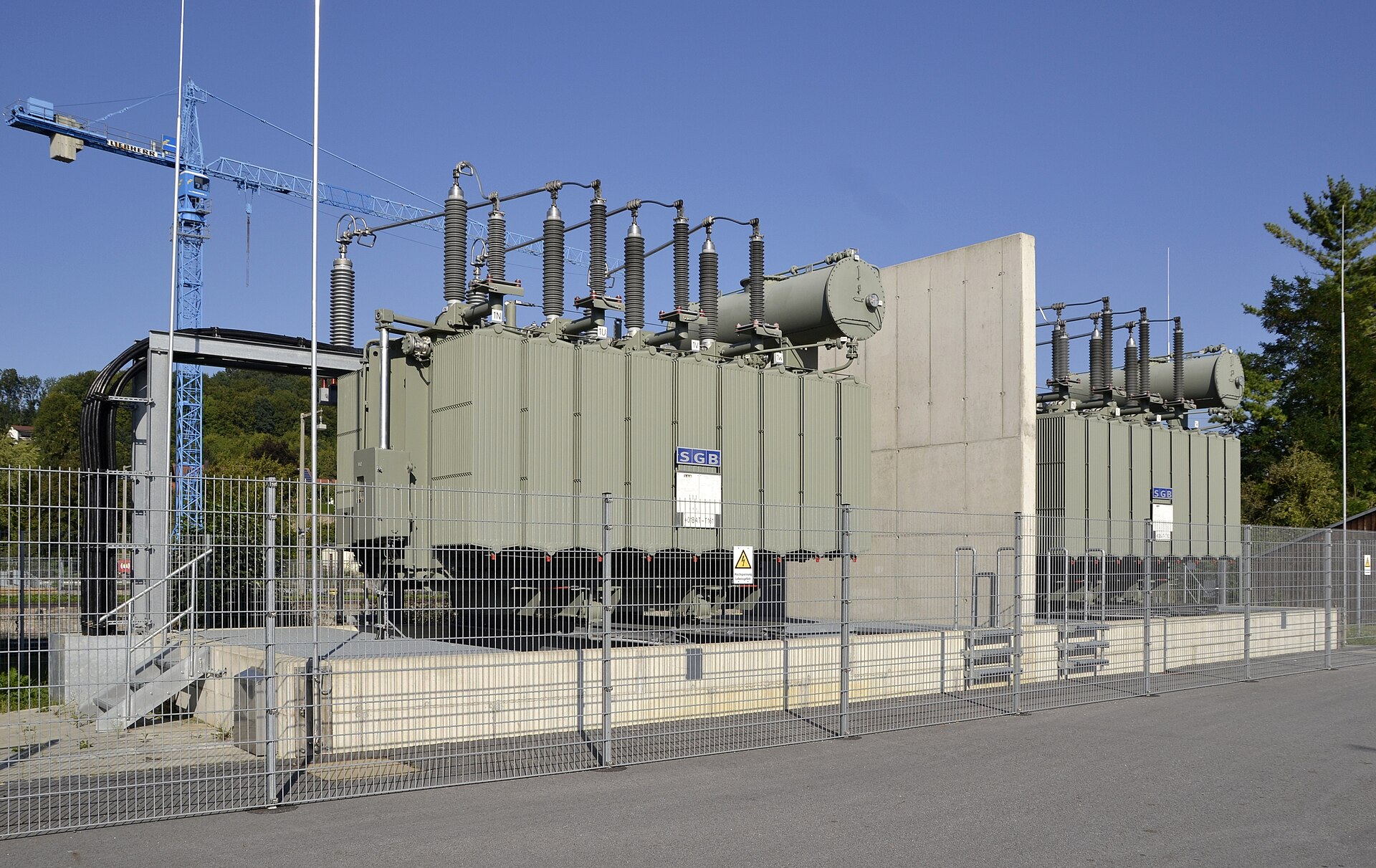
Sizing the European connection bottleneck
Securing high-voltage electricity transmission capacity has replaced shell construction and silicon procurement as the primary pacing factor for European digital infrastructure. The International Energy Agency notes that while a data centre typically takes one to two years to build, wait times for securing a grid connection within the European Union can range from two to ten years, depending on the country[1]. This mismatch creates a structural multi-year backlog for hyperscale operators and enterprise infrastructure teams seeking to deploy high-density clusters.
In the core Tier-1 hubs of Frankfurt, London, Amsterdam, Paris, and Dublin (FLAP-D), developers face queues to obtain a connection that average seven to ten years[1]. The International Energy Agency notes that while the European Commission has set a target of tripling European Union data centre capacity in five to seven years under the AI Continent Action Plan, installed capacity is projected to grow by just 70% by 2030 compared with 2024, in part because of delays and local constraints such as grid congestion[1]. According to the EU Agency for the Cooperation of Energy Regulators, Europe spent EUR 4.3 billion in 2024 on remedial actions to manage grid congestion, covering nearly 60 TWh of redispatching, before counting indirect costs such as the economic consequences of project delays[2].
| Market Segment | Facility Construction Lead Time | Grid Interconnection Lead Time | Primary Bottleneck Factor |
|---|---|---|---|
| FLAP-D Hubs (Core) | One to two years | Seven to ten years (IEA) | Substation congestion and transmission line capacity |
| Secondary Markets (Southern/Central Europe) | One to two years | Within the EU-wide two to ten year range | Transformer availability and regional queue backlogs |
| Nordic Markets | One to two years | Historically at the short end of the EU range, now lengthening | Local distribution approvals and line upgrades |
The widening gap between real estate readiness and power energisation means that physical site ownership no longer equates to operational compute availability, forcing teams sizing European expansion to differentiate between contracted grid commitments and energised capacity.
EirGrid and the Dublin capacity ceiling
Ireland represents the most acute concentration of grid connection constraints in Europe. Central Statistics Office data show that the share of total metered electricity consumption used by datacenters rose from 5% in 2015 to 21% in 2023[3], and the Commission for Regulation of Utilities puts the 2024 figure at 22% of national electricity demand[4]. In the Greater Dublin area, where the majority of hyperscale campuses are co-located, EirGrid, the country's transmission system operator, confirmed it would not connect new data centres for the foreseeable future because the region is constrained, with applications elsewhere in the country considered case by case[5]. EirGrid is now rebuilding the capital's transmission network through its Powering Up Dublin programme[6].
To manage system stability and prevent transmission overloads, the Commission for Regulation of Utilities (CRU) published a new electricity connection policy for data centres on 12 December 2025, setting out the criteria large energy users must meet to obtain grid access from EirGrid and ESB Networks[4]:
- Generation requirement: new data centres must provide generation and/or storage capacity, either onsite or local in proximity, to match the requested data centre maximum import demand capacity, and that generation must participate in the wholesale electricity market to support system adequacy[4].
- Facilities must meet at least 80% of annual demand with additional renewable electricity projects generating in the Republic of Ireland, with a six-year glide path and no reuse of generation already contracted through support mechanisms such as REFIT, RESS or ORESS[4].
- Location and constraint: system operators must consider whether a requested connection sits in a constrained or unconstrained location on the network, focusing on the specific application instead of the current broader regional approach[4].
- System operators must regularly publish network capacity information and must publish an engagement and connection process for data centre applicants by 31 March 2026[4].
These regulatory requirements effectively block speculative capacity reservations in Dublin. Because adding high-voltage substations and subsea interconnectors requires long capital planning cycles, net-new AI clusters cannot secure utility power in the Irish capital within standard corporate deployment horizons.
The Nordic shift and Denmark's 60-gigawatt queue
Faced with 7- to 10-year grid queues across FLAP-D and Dublin, infrastructure developers shifted procurement toward Northern Europe, seeking access to low-carbon hydro and wind power.[7] However, this sudden influx of high-density requests quickly saturated regional grid operators in markets previously regarded as unconstrained.
In Denmark, state-owned transmission system operator Energinet experienced an unprecedented surge in connection applications from large energy users, including AI data centers, battery storage systems, and Power-to-X facilities. By May 2026, connection requests in Energinet's queue climbed to approximately 60 gigawatts (GW), compared to Denmark's national peak electricity demand of approximately 7 GW[8].
- Queue volume vs. peak demand: 60 GW of queued connection applications against a 7 GW baseline domestic peak load.
- Data center share: Data center applications represented approximately 14 GW of the active queue volume.
- Regulatory intervention: Energinet introduced a temporary suspension on concluding new transmission-level grid connection agreements to prevent network destabilisation.
- Screening overhaul: Implementation of stricter maturation criteria to filter out speculative applications from unfinanced developers.
The Danish queue pause demonstrates that secondary and tertiary European markets are subject to identical transmission physics as FLAP-D hubs once institutional capital pivots, closing the window on rapid greenfield grid access across the Nordics.
Megawatt facilities: The scale of AI demand
The severity of European connection delays is amplified by the sheer electrical density of modern AI training and AI inference clusters. While traditional enterprise colocation facilities operated at power densities of 4 kW to 8 kW per rack, accelerated computing deployments housing high-end GPUs require between 40 kW and 100 kW per rack, with next-generation multi-node architectures demanding up to 120 kW per rack.
As reported across industry analyses by Data Center Dynamics, multi-megawatt campuses have evolved into gigawatt-scale infrastructure plans to support frontier foundation models. This concentrated power draw creates unprecedented engineering challenges at the substation level, where sudden step changes in compute load can cause local frequency variations and voltage instability.
Commissioning AI-ready digital infrastructure also requires specialised mechanical and electrical architectures that traditional facilities cannot deliver without extensive retrofitting. Power delivery, high-efficiency liquid cooling loops, and uninterruptible power systems must be validated under extreme thermal stress, adding further complexity to energisation schedules even when utility power is physically present.
| Deployment Tier | Rack Density Range | Facility IT Load | Commissioning Complexity |
|---|---|---|---|
| Legacy Enterprise Hosting | 4-10 kW / rack | 1-5 MW | Standard air cooling; conventional dual-cord utility distribution |
| Standard Cloud Colocation | 10-25 kW / rack | 10-30 MW | Containment aisles; high-capacity chillers and N+1 UPS redundancy |
| Accelerated AI Inference | 30-60 kW / rack | 30-100 MW | Direct-to-chip liquid cooling; high-voltage distribution feeds |
| Frontier Training Clusters | 70-120+ kW / rack | 100-500+ MW | Direct liquid immersion or CDU loops; dedicated on-site substations |
High-density standards from the Open Compute Project
To address the electrical bottlenecks within the facility walls, open-standards bodies have redesigned power distribution architectures. The Open Compute Project (OCP) has driven community-led standards to move facility infrastructure from legacy AC distribution toward low-voltage direct current: its Mount Diablo rack design separates power into a sidecar converting AC to up to 400 VDC, and the working group's March white paper sets out a path to moving conversion outside the server room so up to 800 VDC can flow to servers[9].
Stepping up voltage from traditional 48 V or 400 V power delivery to 800 VDC significantly reduces current draw, allowing high-density AI server rows to operate with thinner copper busbars, reduced thermal dissipation, and fewer power conversion stages. This architectural shift provides essential efficiency gains for facilities facing strict grid allocation limits:
- Reduced conversion loss: Eliminates unnecessary AC-to-DC conversion stages between facility substations and server power supplies.
- Thermal mitigation: Lower operational current reduces resistive heat generation across high-density power delivery paths.
- Copper conservation: Higher voltage enables lighter cabling infrastructure, solving physical weight constraints in multi-row GPU clusters.
- Standardised LVDC specifications: An OCP working group including Google, ABB, and Siemens is drafting open specifications so that multi-vendor DC power equipment interoperates, on the argument that no single vendor can supply the whole chain[9].
While 800 VDC standards solve critical distribution challenges inside the data hall, they depend fundamentally on securing an energised utility connection at the building perimeter, leaving upstream transmission delays as the unresolved bottleneck for new facility construction.
Bypassing the queue with Large-Scale GPU Cluster
For AI platform engineering and procurement teams, waiting 7 to 10 years for new European substation builds is incompatible with product delivery timelines. The alternative to entering a grid queue is procuring already-energised, fully commissioned GPU compute capacity in established European facilities.
Rather than waiting on utility interconnections, organisations can deploy high-density workloads across already-energised European data centres located in Spain, Paris, and the Nordics.
- Instant capacity provisioning: Compute infrastructure is already wired to transmission grids and operational with no construction lead time.
- Deployment scale: Supports single-customer cluster deployments scaling up to 1,000 GPUs on dedicated infrastructure.
- European data centres: Tier-compliant facilities across Spain, Paris, and the Nordics providing verified European jurisdiction.
- Flexible commercial terms: Reserved, on-demand, and hybrid commitment models with capacity expandable on 2 to 3 weeks notice.
By provisioning capacity on Large-Scale GPU Cluster, platform operators secure immediate, high-density compute capacity today while insulating their deployment roadmaps from European grid interconnection delays.
Frequently asked questions
How long are datacenter grid connection delays in Europe?
Wait times for securing a grid connection in the European Union range from two to 10 years, depending on the jurisdiction and local grid congestion. Markets like Frankfurt and Dublin face some of the strictest constraints, with wait lists frequently reaching seven years for major builds.
Why did Denmark pause new datacenter grid connections?
Denmark's grid operator paused new connection agreements because the system was overwhelmed by a 60-gigawatt queue of projects. This queue represented nearly nine times the country's peak electricity demand, forcing a halt to assess grid stability.
How does EirGrid manage datacenter capacity in Ireland?
EirGrid manages capacity through strict connection policies for large energy users. This limits the pace at which new hyperscale facilities can draw power from the Irish transmission system, effectively creating a capacity ceiling in the Dublin region.
What power standard is the Open Compute Project developing for AI?
The Open Compute Project is collaborating with major AI infrastructure builders to establish 800 VDC as the standardized power architecture. This shift addresses the higher power density and efficiency requirements of next-generation AI datacenters.
How can AI providers avoid datacenter construction delays?
AI platform providers can bypass multi-year facility build and grid connection queues by deploying workloads on Large-Scale GPU Cluster. Securing space in a Large-Scale GPU Cluster that already holds energised capacity in European locations eliminates the infrastructure wait entirely.
Sources
- Overcoming energy constraints is key to delivering on Europe's data centre goals – Analysis - IEA iea.org
- European Power Grid Report: ACER flags bottlenecks and integration needs globaltransmission.info
- Key Findings Data Centres Metered Electricity Consumption 2023 - Central Statistics Office cso.ie
- CRU Publishes its Decision on New Electricity Connection Policy for Data Centres | CRU.ie cru.ie
- No new data centres for Dublin for the 'foreseeable' rte.ie
- Powering Up Dublin | Projects eirgrid.ie
- Grids for data centres꞉ ambitious grid planning can win Europe’s AI race ember-energy.org
- Finding Alpha in the AI Power Buildout megawattalpha.com
- OCP members tout DC power in the data center to meet growing AI energy demands datacenterdynamics.com
Rankings and scores on Optinest cannot be bought — no commercial relationship changes how a provider is assessed. How we score
Related reading
All Datacenters →Low Latency AI: European Datacenter and Market Constraints
Analyze the power constraints reshaping Europe's AI datacenter market. Learn how grid queues and the FLAP-D latency premium impact inference deployments.

Europe's grid queue is now the build constraint
Track datacenter grid connection queue lengths across Europe. Discover why wait times stretch up to a decade and how to secure available AI capacity.

Lead time datacenter GPU
Track 2026 datacentre GPU lead times, from 52-week hardware delays to cloud capacity blocks, and compare AI accelerator vendors for capacity planning.
