Low Latency AI: European Datacenter and Market Constraints
Analyze the power constraints reshaping Europe's AI datacenter market. Learn how grid queues and the FLAP-D latency premium impact inference deployments.
In this article8
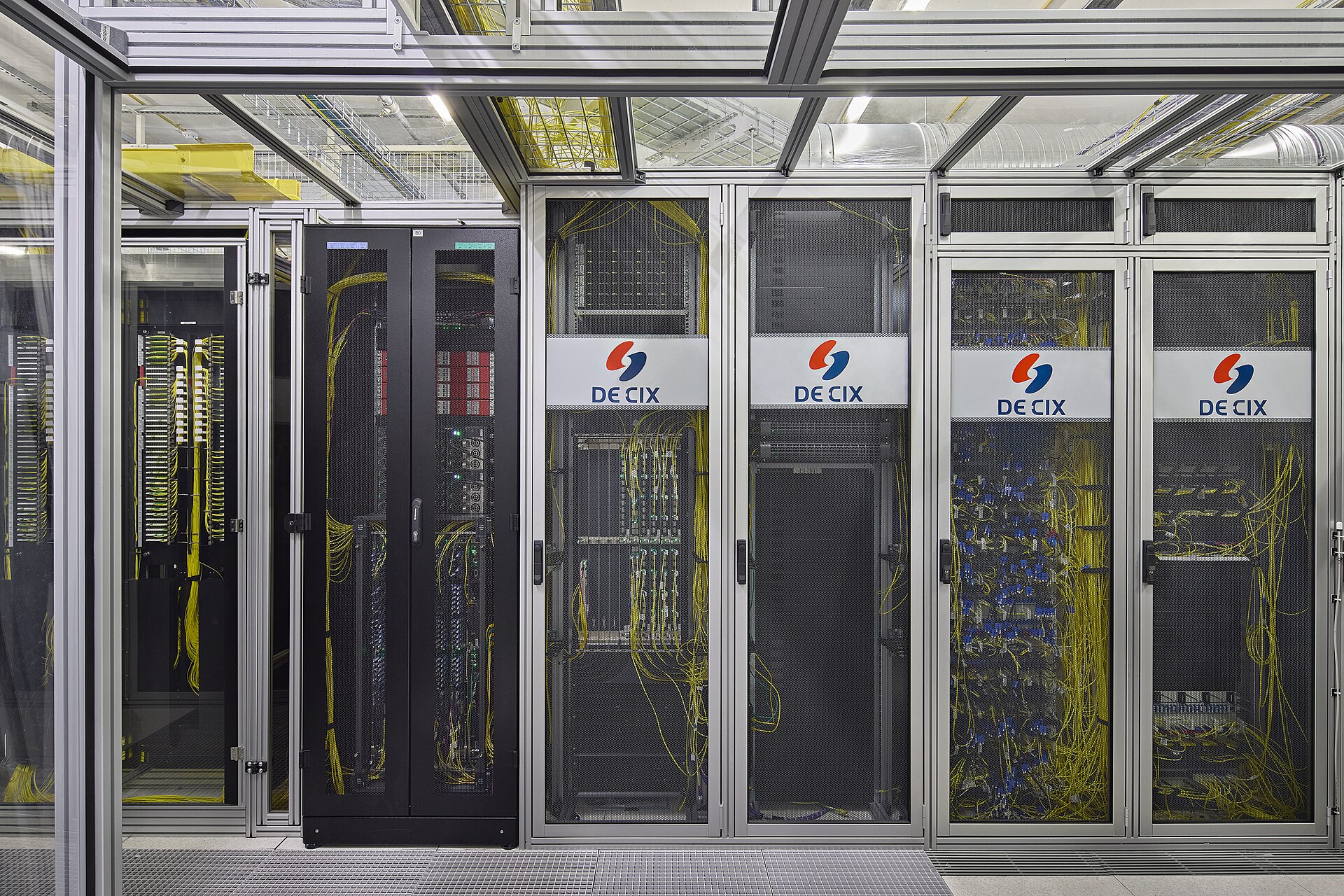
The Scale of European Power Demand
European datacenter electricity consumption is projected to reach between 150 and 170 TWh by 2030 according to research published by Rabobank[1]. That volume represents close to 5 percent of total projected European electricity demand, up from an estimated 60 to 100 TWh per year in 2025. On a global scale, the European Commission estimates that total datacenter electricity consumption will expand from approximately 415 TWh to 945 TWh by 2030, driven primarily by the high energy requirements of accelerated computing clusters deployed for artificial intelligence[2].
This acceleration in power requirements reflects a fundamental shift in workload profiles. While conventional enterprise cloud computing operates at 7 to 10 kW per rack, high-density AI clusters routinely draw between 30 and 100 kW per rack. Enterprise AI adoption in the European Union reached 20.0 percent of enterprises with 10 or more employees in 2025.[3] Infrastructure operators therefore face growing aggregate power baselines that cannot be accommodated through standard utility substation headroom in metropolitan centers.
| Geographic Scope | Metric | Baseline Electricity Load | 2030 Projected Electricity Load | Primary Driver |
|---|---|---|---|---|
| European Union / Wider Europe | Datacenter Power Demand | 60-100 TWh | 150-170 TWh | AI inference, cloud migration, and model training |
| Global | Datacenter Power Demand | 415 TWh | 945 TWh | Accelerated computing hardware expansion |
The resulting electricity footprint makes datacenters one of the fastest-growing industrial offtakers on the European grid. Consequently, access to dedicated, high-capacity transmission infrastructure has superseded standard real-estate metrics as the primary bottleneck for new facility planning across the continent.
The FLAP-D Latency Premium
Combined live capacity across Europe's primary tier-one markets (Frankfurt, London, Amsterdam, Paris, and Dublin, known collectively as FLAP-D) reached 3.8 GW in the first half of 2026 according to JLL[4]. Despite acute power availability constraints in each of these metropolitan areas, approximately 453 MW of new capacity is forecast for full-year delivery in 2026 across the five hubs, almost tripling 2020 delivery volumes.
The enduring concentration of capital in tier-one hubs stems from the latency constraints of inference workloads. Unlike model training workloads, which can tolerate higher latency and run in remote regions with abundant renewable electricity, interactive AI inference requires low-millisecond response times to serve end users, digital exchange platforms, and enterprise software stacks. Because major internet exchange points (such as DE-CIX in Frankfurt and AMS-IX in Amsterdam) route regional traffic, physical proximity remains essential for real-time applications.
- Prime powered land costs in FLAP-D hubs rose 82 percent between 2021 and 2026, reaching 2.26 million EUR per MW[4].
- Primary metropolitan markets command a 2.3x pricing premium over secondary regional locations and a 4x premium over tertiary sites[4].
- FLAP-D markets maintain 1.4 GW of capacity under active construction and an additional 2 GW in planning stages[4].
- Pre-leasing has become standard practice, with operators securing tenant commitments years before facility energisation.
This pricing spread demonstrates that operators and colocation tenants are willing to absorb elevated capital expenditure to secure millisecond-level proximity to European enterprise networks.
Grid Connection Queues and Frankfurt Constraints
Across the FLAP-D hubs the International Energy Agency puts the queue to obtain a grid connection at an average of seven to ten years, against an EU-wide range of two to ten years depending on the country.[6] Frankfurt represents the most constrained tier-one datacenter market in continental Europe. According to research from Neospaces, lead times for high-voltage grid connections in the Frankfurt municipal area currently range from 24 to 36 months, with no new utility-scale substations scheduled to come online before the second quarter of 2027[5]. Datacenters currently account for up to 40 percent of total municipal electricity demand in Frankfurt, effectively reducing available urban grid headroom for new projects to zero[5].
This physical grid bottleneck is directly reflected in market availability data. Colocation vacancy in Frankfurt dropped to 3.1 percent in the second quarter of 2026 according to JLL, representing less than half the wider FLAP-D average vacancy rate of 6.4 percent[4].
| Market Area | Q2 2026 Vacancy Rate | Grid Connection Lead Time | Key Operational Constraint |
|---|---|---|---|
| Frankfurt | 3.1% | 24 to 36 months (city high-voltage connection) | Municipal substation saturation and 40% city power share |
| FLAP-D Average | 6.4% | 7 to 10 years (IEA connection-queue average) | Transmission queue backlogs and local planning moratoria |
| London | 7.4% | No market-specific figure published | National Grid transmission reinforcement delays |
| Paris | 8.0% | No market-specific figure published | Substation capacity pacing balanced by nuclear base supply |
As verified in broader EU data center statistics, the scarcity of contiguous, high-density space in Frankfurt has converted existing powered shells into premium infrastructure assets, forcing developers to look outward.
Pipeline Migration to Regional Clusters
Because central metro grids cannot accommodate new 50 to 100 MW campus allocations, development pipelines are shifting rapidly toward secondary and edge regions. Greenfield developments have risen to account for 39 percent of the 2026 to 2028 European development pipeline, up from 8 percent in earlier build cycles, according to JLL data[4]. Concurrently, the average distance of hyperscale development sites from primary hub city centers has increased from 46 kilometers to 175 kilometers.
Within Germany's Rhine-Main metropolitan corridor, pipeline migration has expanded heavily into secondary towns such as Hanau, Hattersheim, Offenbach, and Schwalbach, which remain inside the latency budget for a direct DE-CIX connection[5]. Larger projects are moving further out: NTT's FRA6 campus at Nierstein, a former US Army barracks site around 50 kilometres south of Frankfurt, won unanimous council approval for a development plan covering 482 MW[7]. These locations offer available high-voltage utility allocations while remaining close enough to preserve the latency margins required for direct fiber interconnection with DE-CIX Frankfurt.
- Phase 1: Securing regional utility connection agreements 24 to 36 months in advance at designated industrial substations[5].
- Phase 2: Deploying high-density server halls in secondary clusters like Hanau and Hattersheim.
- Phase 3: Interconnecting regional campuses to primary exchange points using dedicated dark fiber routes to preserve latency margins.
This geographical redistribution provides the necessary land parcels and electrical capacity for next-generation AI compute clusters without severing connectivity to European digital markets. Teams that buy inference capacity rather than build it make the same siting decision one step removed: choosing a provider region fixes both the network path to European users and the jurisdiction the data sits under.
Efficiency Mandates and Power Purchase Agreements
Facility expansion across Europe is strictly conditioned on compliance with national and European sustainability frameworks. In Germany, the Energy Efficiency Act (Energieeffizienzgesetz, EnEfG) establishes statutory efficiency benchmarks that mandate all datacenter facilities entering operations from 2026 onward to achieve an annualised Power Usage Effectiveness (PUE) rating of 1.2 or lower, while existing operational assets are subject to a maximum PUE ceiling of 1.3[5].
In parallel with thermal efficiency thresholds, operators face mandatory renewable energy procurement targets. German legislation requires datacenter operators to evidence at least 50 percent renewable electricity supply from 2027, rising to 100 percent from 2030[5]. Coupled with the European Union's corporate sustainability reporting framework, documented in CSRD datacenter reporting rules, operators must provide auditable, location-based emissions disclosures.
| Regulatory Instrument | Target Entity | Compliance Deadline | Mandatory Requirement |
|---|---|---|---|
| German EnEfG | New Data Centers | Effective 2026 | Maximum PUE of 1.2 and waste-heat reuse capability |
| German EnEfG | Existing Data Centers | Effective 2026 | Maximum PUE of 1.3 |
| German EnEfG | Data Center Operators | Effective 2027 | 50% renewable electricity share |
| German EnEfG | Data Center Operators | Effective 2030 | 100% renewable electricity coverage |
To meet these statutory quotas, datacenter operators have emerged as the largest corporate buyers in European Power Purchase Agreement (PPA) markets, contracting long-term wind and solar generation to hedge wholesale price volatility and secure compliance[1].
Sovereign Compute and the AI Gigafactories Initiative
To counterbalance commercial grid bottlenecks and address strategic infrastructure dependencies, the European Union is establishing dedicated public and public-private computing capacity. Under Council Regulation (EU) 2026/150, the European High Performance Computing Joint Undertaking (EuroHPC JU) issued an official call on 30 July 2026 to select consortia that will build and operate up to 7 AI Gigafactories across the EU[8].
These AI Gigafactories are designed as large-scale industrial compute hubs equipped with state-of-the-art AI accelerators to support the entire model lifecycle, including frontier training and high-throughput inference for European industry, research entities, and startups. Following proposal evaluation in early 2027, selected facilities are scheduled to begin commercial and scientific operations within 18 months of selection[8].
- Procurement structure: Joint funding from EuroHPC JU and participating Member States designed to mobilize over 20 billion EUR in total public-private investment[8].
- Facility footprint: Up to 7 AI Gigafactories distributed across at least seven EU Member States, including cross-border collaborative setups[8].
- Deployment timeline: Facilities are mandated to become operational within 18 months of consortium selection in early 2027[8].
- Operational scope: Integration of high-efficiency datacenter infrastructure with sovereign software stacks and low-latency network interconnects[8].
By co-locating supercomputing capacity with high-bandwidth interconnects and verified renewable supplies, the AI Gigafactories initiative establishes an independent compute tier that operates alongside commercial colocation markets to anchor Europe's low-latency digital economy.
Frequently asked questions
Why are AI inference workloads sensitive to datacenter location?
Inference workloads prioritize proximity and connectivity to minimize latency for end-users. Unlike AI training, which can be located near cheap renewable power regardless of geography, interactive inference is judged on low-millisecond response times, forcing operators to compete for space in saturated tier-one hubs.
How long is the grid connection queue for datacenters in Europe?
Connection timelines vary heavily by region. The International Energy Agency puts the average queue to obtain a connection across the FLAP-D hubs at seven to ten years, against an EU-wide range of two to ten years. Inside Frankfurt city, high-voltage connection lead times run 24 to 36 months, forcing new builds into regional sites.
What is the projected power consumption of European datacenters?
Datacenter electricity demand in Europe is forecast to grow substantially, reaching up to 170 TWh by 2030, driven heavily by AI infrastructure expansion.
How does the German Energy Efficiency Act affect data centers?
New facilities must achieve a Power Usage Effectiveness of 1.2 from 2026, and operators are required to source 50 percent of their power from renewables by 2027.
What is the European AI Gigafactories initiative?
It is a public procurement program led by the EuroHPC Joint Undertaking to build up to 7 large-scale sovereign AI computing facilities, which will begin operations within 18 months of their selection.
Sources
- rabobank.com
- Energy performance of data centres energy.ec.europa.eu
- 20% of EU enterprises use AI technologies ec.europa.eu
- EMEA data centre mid-year 2026 report jll.com
- AI-native Commercial Real Estate Brokerage Deutschland neospaces.de
- Overcoming energy constraints is key to delivering on Europe's data centre goals – Analysis - IEA iea.org
- NTT gains council approval for 482MW data center campus in Nierstein, Germany datacenterdynamics.com
- The EuroHPC Joint Undertaking launches the AI Gigafactories Call eurohpc-ju.europa.eu
Rankings and scores on Optinest cannot be bought — no commercial relationship changes how a provider is assessed. How we score
Related reading
All Datacenters →Datacenter Power Queues: Sizing European Connection Delays
Analyze European datacenter power queues, capacity limits, and grid connection delays. Learn how infrastructure wait times impact AI deployment planning.

AI data centers in Europe: Hubs, grids and sovereignty
Learn how grid constraints in major hubs and the push for digital sovereignty are shaping the European AI data center market and shifting capacity to the

Where to run Kimi K3 in Europe, and what it costs
Compare published Kimi K3 token prices across European inference providers, including cached rates, and learn what rate cards do not cover.
