AI data centers in Europe: Hubs, grids and sovereignty
Learn how grid constraints in major hubs and the push for digital sovereignty are shaping the European AI data center market and shifting capacity to the
In this article8
- The EU goal to triple AI data center capacity
- Grid congestion limits FLAP-D market expansion
- Nordic regions emerge as sustainable edge hubs
- Digital sovereignty and the reliance on foreign providers
- The US CLOUD Act loophole and legal exposure
- Selecting European providers for sovereign AI workloads
- Frequently asked questions
- Sources
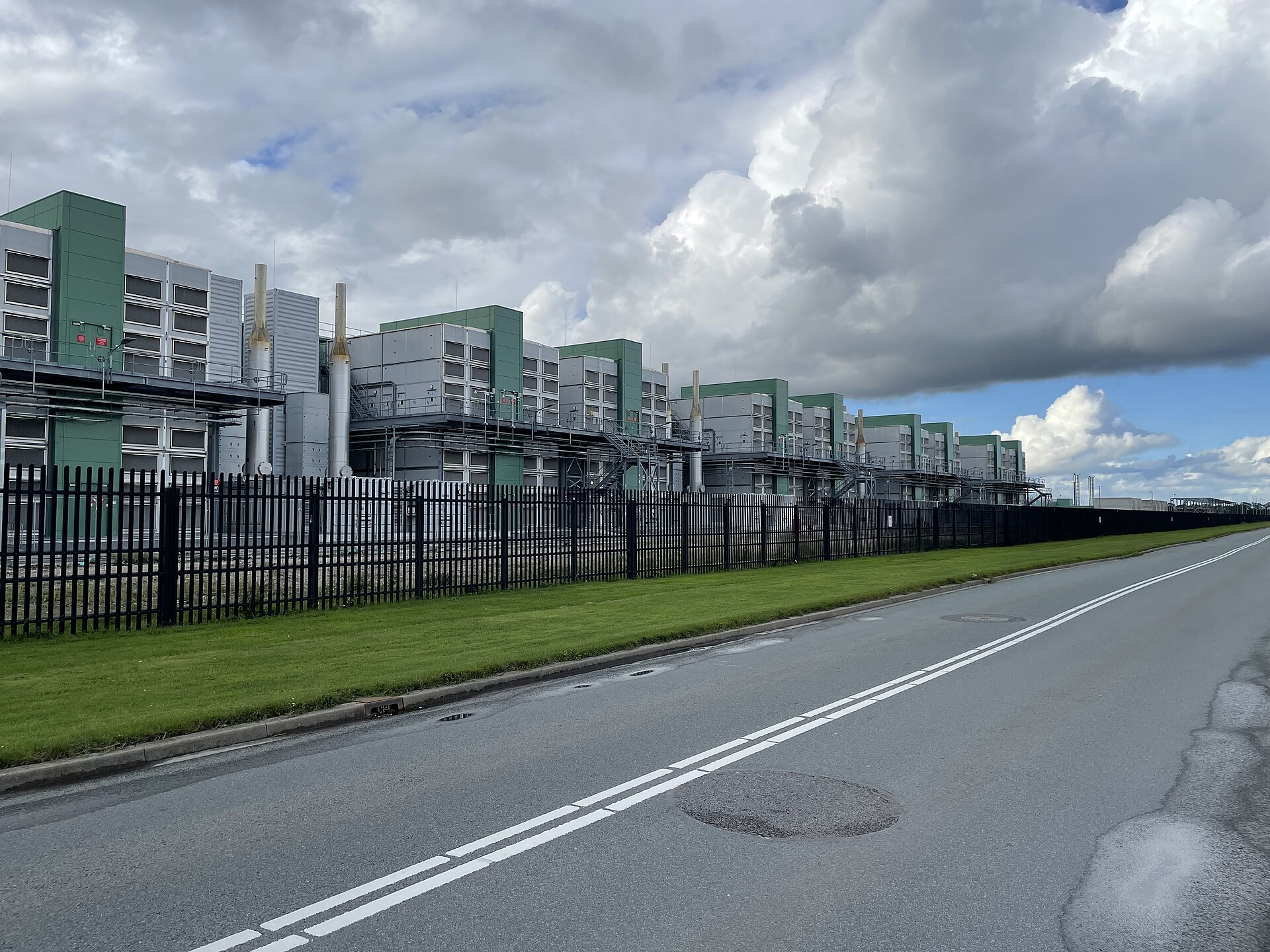
The EU goal to triple AI data center capacity
The European Commission launched the AI Continent Action Plan and InvestAI initiative to scale compute infrastructure and at least triple the European Union's data center capacity within five to seven years, putting the target in the 2030 to 2032 window[1]. Backed by plans to mobilize 200 billion euros in total AI investment, including 20 billion euros targeted at large-scale AI gigafactories, the policy framework addresses a structural compute deficit. The European data center market, valued at 47 billion dollars in 2024, is projected to reach approximately 97 billion dollars by 2030[2].
This expansion drives a steep increase in electrical load across the bloc. Data centers in Europe consumed roughly 96 TWh of electricity in 2024, about 3.1% of total power demand[3]. Grid and market projections compiled in EU data center statistics put electricity consumption from data facilities on track to reach 150 to 170 TWh by 2030, rising to close to 5% of total projected EU power demand[4].
| Metric | 2024 Baseline | 2030–2032 Target | Source |
|---|---|---|---|
| European data center market valuation | 47 billion USD | 97 billion USD (2030) | Eninrac Horizon Market Analysis |
| Share of total European electricity demand | About 3% | Close to 5% (150-170 TWh) | RaboResearch / JLL Outlook |
| AI infrastructure investment mobilization | - | 200 billion EUR | European Commission AI Action Plan |
Grid congestion limits FLAP-D market expansion
The five established tier-one colocation markets in Western Europe: Frankfurt, London, Amsterdam, Paris, and Dublin (FLAP-D), face acute grid congestion and land constraints. Transmission system operators across these metropolitan hubs report multi-year connection queues. Connecting a new facility in congested FLAP-D locations can require lead times extending up to 10 years when major substation or grid reinforcement is required[4].
Regulatory interventions have reinforced these physical limits. Municipal zoning rules and connection allocation policies have restricted speculative builds, including moratoria in Amsterdam and Dublin's stringent generation requirements, leading to a geographical redistribution of new capacity across European AI data center hubs.
- Secondary markets such as the Nordics and Southern Europe are expected to grow data center demand by about 110% by 2030, roughly double the 55% growth projected for the FLAP-D hubs, and by 2035 half of Europe's capacity is expected to sit outside the traditional hubs[6].
- Substation and transmission backlogs in Frankfurt and London stretch energisation well past the construction schedule, pushing large AI training clusters elsewhere.
- Hyperscale AI deployments draw tens of megawatts per cluster, exceeding available local substation allocations in core metro regions.
Nordic regions emerge as sustainable edge hubs
As core Western European markets face connection delays, the Nordic countries (Sweden, Norway, Finland, Denmark, and Iceland) have become primary destinations for energy-intensive AI training workloads. Sweden and Finland account for the bulk of operational IT load in the region, and both continue to attract hyperscale self-build and colocation projects as grid capacity there remains available.
The Nordic advantage rests on abundant low-carbon power, direct grid availability, and favorable ambient temperatures. Average power usage effectiveness (PUE) in Nordic facilities ranges between 1.10 and 1.20, with Iceland at 1.10, Norway at 1.15, Finland at 1.16 and Sweden at 1.18.[2] Cold climatic conditions allow year-round direct air free cooling, reducing non-IT power draw.
- Power costs remain highly competitive across the region: Iceland averages 35 euros per MWh, Norway 40 euros per MWh, and Finland 42 euros per MWh[2].
- Waste heat reuse: Facilities in Finland and Sweden connect liquid-cooled heat exchangers directly to municipal district heating networks, warming residential homes without additional fuel emissions.
- Year-over-year operational capacity expansion reached 28.7% in Finland and 25.3% in Sweden in 2024[2].
Digital sovereignty and the reliance on foreign providers
Despite expanding local capacity, Europe faces an architectural dependence on foreign cloud operators. US-headquartered hyperscalers (Amazon Web Services, Microsoft Azure, and Google Cloud) control more than 70% of the European cloud infrastructure market, while European domestic cloud providers collectively hold under 15%[7].
This asymmetry has made digital sovereignty a primary economic and security priority for European policymakers. EU institutions view independence in compute, foundational models, and data orchestration as essential for preserving industrial confidentiality and ensuring resilience against extraterritorial policy changes.
- Market concentration: Top three US cloud providers hold over 70% market share in Europe[7].
- Enterprise dependency: European domestic providers hold less than 15% combined market share[7].
- Regulatory alignment: Strategic EU infrastructure initiatives prioritize domestic data processing to insulate critical industries from supply disruptions and foreign regulatory reach.
The US CLOUD Act loophole and legal exposure
A persistent compliance risk for European enterprises is the distinction between data residency and legal data sovereignty. Under the Clarifying Lawful Overseas Use of Data (CLOUD) Act of 2018 (18 U.S.C. 2713), US federal law enforcement can compel US-based technology providers to disclose customer data in their custody or control, regardless of whether the physical servers are located in Frankfurt, Paris, or Dublin.
This statutory extraterritorial reach means that selecting an EU-located availability zone operated by a US parent entity creates clear data residency limitations. When a provider is subject to US jurisdiction, mandatory disclosure orders conflict directly with European General Data Protection Regulation (GDPR) obligations regarding international data transfers.
| Dimension | EU Availability Zone (US Hyperscaler) | Native European Infrastructure Provider |
|---|---|---|
| Physical server location | EU member state (e.g., Germany, France) | EU member state (e.g., Germany, France) |
| Corporate legal domicile | US parent corporation (subject to 18 U.S.C. 2713) | EU member state exclusively |
| US CLOUD Act exposure | Subject to extraterritorial disclosure orders | Immune to extraterritorial US warrants |
| GDPR and NIS2 alignment | Requires supplementary transfer safeguards and risk assessments | Native regulatory and jurisdictional compliance |
Selecting European providers for sovereign AI workloads
To eliminate jurisdictional exposure and satisfy strict compliance mandates under the NIS2 Directive and the Digital Operational Resilience Act (DORA), enterprise procurement teams are evaluating sovereign European cloud providers. True legal sovereignty requires that the data center operator, cloud software stack, and operational personnel remain free of non-EU corporate ownership and control.
Independent European operators provide complete infrastructure ownership across both colocation and managed inference layers. Providers such as Data4 manage hyperscale European campuses across France, Italy, Spain, and Poland, while OVHcloud and Nebius provide scalable, sovereign GPU clusters and inference APIs built to satisfy EU data protection standards. At the inference layer the geography is a double decision: the same site choice sets both the round-trip latency to European users and the jurisdiction the data sits under.
- Corporate ownership: Ensure the operator and all parent entities are incorporated within the EU or EEA with no foreign ownership triggers.
- Security certification: Verify adherence to the BSI C5 criteria catalogue, SecNumCloud, or ISO 27001 certifications.
- Operational control: Confirm that system operations, cryptographic key management, and data handling are performed exclusively by EU-based personnel.
Frequently asked questions
What is the European Union target for data center capacity?
The European Commission AI Continent Action Plan aims to triple the data center capacity within the EU between 2030 and 2032. This expansion supports the push for digital sovereignty and domestic AI computing power, driving the European data center market which was valued at $47 billion in 2024.
Why is data center growth slowing in FLAP-D markets?
Traditional hubs like Frankfurt, London, Amsterdam, Paris, and Dublin are facing severe electricity grid congestion. These power constraints have led to connection delays and moratoriums, and demand in the FLAP-D hubs is projected to grow at only about half the rate of less congested secondary markets by 2030.
How much electricity will EU data centers consume?
Data centers accounted for about 3 percent of European electricity consumption in 2024, roughly 96 TWh. With the growing use of artificial intelligence and increased compute workloads, that share is expected to approach 5 percent by 2030.
Why are AI data centers moving to Nordic countries?
Operators are shifting to Nordic countries because they offer better grid availability and abundant renewable energy. Additionally, the cold climate improves baseline cooling efficiency, and facilities can integrate with district heating networks to reuse waste server heat for local communities.
Does an EU data center guarantee data sovereignty?
No. If the data center is operated by a company with a US parent entity, it is subject to the US CLOUD Act. This law compels US-headquartered providers to produce customer data for law enforcement regardless of where the data physically resides, bypassing GDPR protections.
How can European companies ensure true AI data sovereignty?
Organizations must use full-stack infrastructure owned and operated by European entities with no US parent company. Partnering with sovereign European providers ensures that data remains strictly under EU jurisdiction, helping companies comply with regulations like NIS2 and DORA.
Sources
- AI Continent Action Plan | Shaping Europe’s digital future digital-strategy.ec.europa.eu
- Europe Data Center Market Forecast: Near $100B by 2030 eninrac.com
- Data Centers Consume 3% of Energy in Europe: Understand Geographic Hotspots and How AI Is Reshaping Demand powermag.com
- rabobank.com
- AI continent commission.europa.eu
- Grids for data centres꞉ ambitious grid planning can win Europe’s AI race ember-energy.org
- These four charts show how reliant Europe is on U.S. digital infrastructure cnbc.com
Rankings and scores on Optinest cannot be bought — no commercial relationship changes how a provider is assessed. How we score
Related reading
All Datacenters →AI Data Centers in Europe Map: Hubs and Locations
Explore the map of AI data centers in Europe, top hubs, and leading providers. Learn how power constraints and data sovereignty shape the landscape.

Low Latency AI: European Datacenter and Market Constraints
Analyze the power constraints reshaping Europe's AI datacenter market. Learn how grid queues and the FLAP-D latency premium impact inference deployments.

Best datacenters Europe AI workloads: Provider comparison
Compare the top European data centers for AI workloads in 2026, evaluating inference infrastructure, operational capacity and true data sovereignty.
