How risky is liquid cooling
When asking how risky is liquid cooling, buyers must evaluate operational downsides, fluid maintenance costs, and data center total cost of ownership.
In this article8
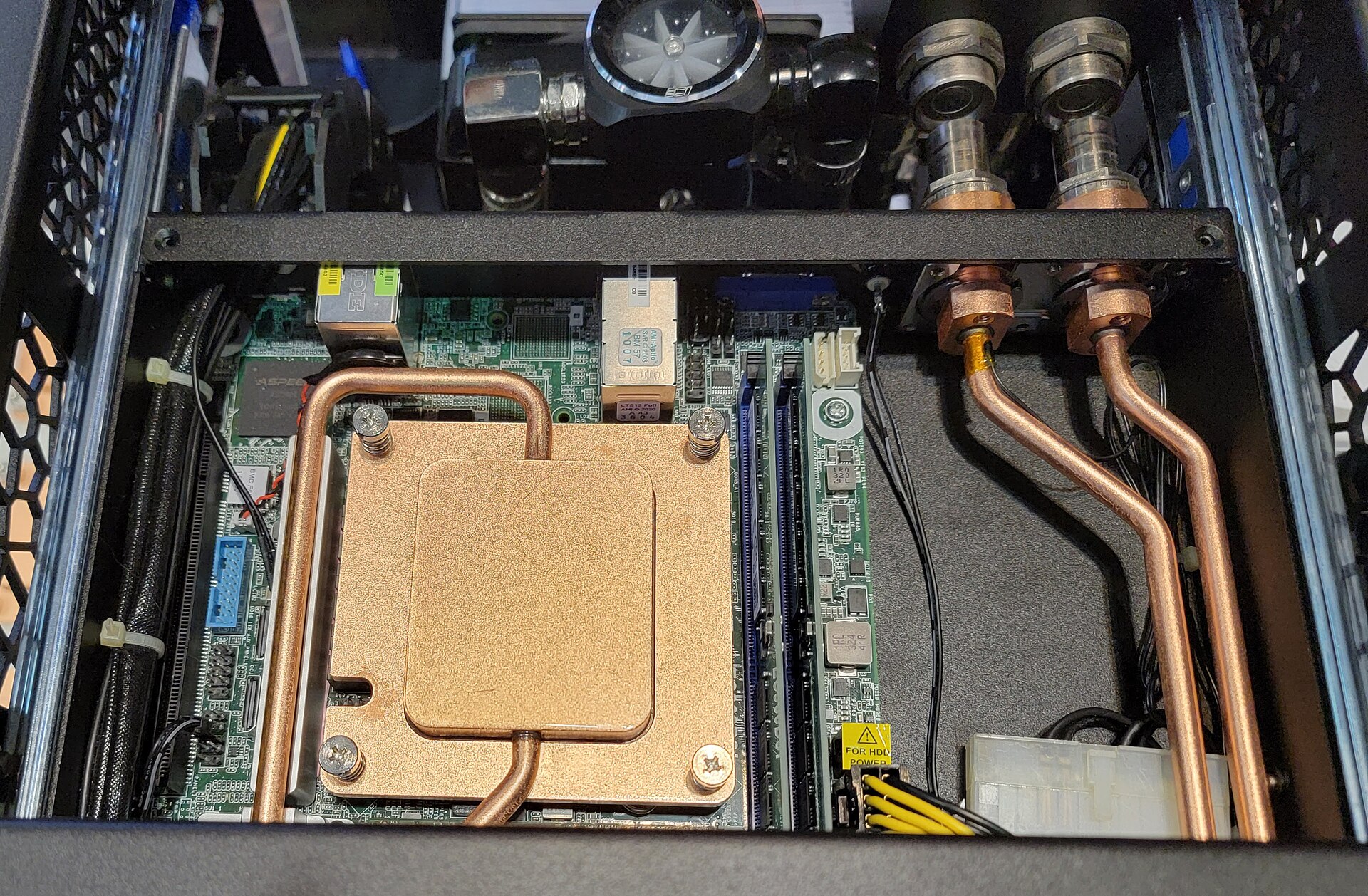
What are the downsides of liquid cooling?
Liquid cooling introduces superior thermodynamic heat transfer compared to forced air, but it replaces simple airflow management with mechanical and chemical facility complexity. The primary operational downside is the substantial capital expenditure required for facility retrofitting, specialized plumbing distribution units (CDUs), and secondary fluid loops. While air-cooled facilities rely on standardized computer room air handlers, liquid infrastructure demands dedicated pipework, leak containment basins, and redundant pumping stations.
Operational expenditure and fluid management overhead
Fluid management represents a recurring operational burden that does not exist in conventional air-cooled server rooms. Closed-loop direct-to-chip systems and immersion baths require scheduled chemical testing to monitor pH levels, glycol concentration drift, and biological inhibitor health. Without continuous chemical monitoring, dielectric fluids and water-glycol mixtures can degrade, leading to particulate buildup, biofouling, or accelerated galvanic corrosion across copper microchannels and aluminum radiator blocks.
- Capital expenditure: Dedicated coolant distribution units, manifolds, and reinforced floor loading push capital cost 30% to 150% above air cooling, depending on the technology chosen.[1]
- Maintenance complexity: Coolant loops require routine filtration changes, biocide replenishments, and strict chemical sampling schedules.
- Facility retrofitting: Legacy datacenters often lack the structural load capacity and drainage pathways required for multi-ton immersion tanks or high-volume fluid loops.
- Supply chain standardization: Unlike standardized server chassis fans, liquid quick-disconnect couplings, hoses, and cold plates often rely on proprietary vendor form factors.
Facilities adopting advanced liquid cooling methods must also account for specialized technician training. Servicing an immersed chassis or replacing a direct-to-chip cold plate requires strict fluid containment protocols to prevent facility spills and downtime.
External energy inputs and grid requirements
Deploying high-density liquid-cooled compute clusters shifts the bottleneck from thermal dissipation inside the server chassis to the external electrical supply. Liquid cooling enables compute densities exceeding 40 kW to 100 kW per rack, concentrating massive electrical demand onto localized substation feeds. Connecting such facilities to high-voltage transmission networks requires rigorous coordination with European transmission system operators (TSOs) to maintain grid stability and reserve capacity.
Grid frequency limits and transmission constraints
In European power systems, transmission grid stability depends on keeping the operating frequency near nominal targets. German transmission system operator Amprion, for example, runs an 11,000-kilometre extra-high voltage grid transporting electricity from the North Sea to the Alps[2]. Its system control keeps the frequency from falling below 49.8 hertz or exceeding 50.2 hertz, using its toolkit to pull the frequency back into the stable range when it drifts[3]. Similarly, TSO 50Hertz continuously compensates fluctuations between generation and consumption to hold the standard grid frequency of 50 hertz, working with high-precision forecasts and market-based balancing measures[4]. Cross-border operators such as TenneT, which runs onshore and offshore transmission assets in Germany and the Netherlands, coordinate large new connections against available network capacity, so a dense compute campus is as much a grid-planning question as a thermal one.
| Transmission Operator | Primary Territory | Key Grid Metric | Operational Constraint |
|---|---|---|---|
| Amprion | Germany (West/South) | 11,000 km extra-high voltage grid | Frequency kept between 49.8 Hz and 50.2 Hz |
| 50Hertz | Germany (North/East) | 50 Hz standard grid frequency | Fluctuations between generation and consumption compensated continuously |
| TenneT | Germany / Netherlands | European cross-border grid | Dynamic grid flexibility and capacity expansion |
Efficiency matters because the underlying load is growing fast: the International Energy Agency projects that data centre electricity consumption will more than double to around 945 TWh by 2030, with AI the most important driver[5]. When datacenters deploy liquid cooling, the resulting thermodynamic efficiency reduces mechanical chiller overhead, helping facility operators stay within strict utility power allocations while scaling compute capacity.
Is it worth getting liquid cooling?
The financial return on liquid cooling depends almost entirely on power density per rack. In low-density environments where server racks draw under 15 kW to 20 kW, standard hot-aisle/cold-aisle air containment remains more cost-effective due to minimal CapEx requirements. However, modern accelerator architectures like NVIDIA Blackwell and high-density compute clusters draw 30 kW to over 100 kW per rack, where conventional air cooling reaches physical and thermodynamic limits.
The density crossover and thermodynamic dividends
Liquid has roughly 3,000 times higher volumetric heat transfer capacity than air, allowing direct-to-chip cold plates and immersion fluids to capture thermal energy directly at the semiconductor package[6]. At scale, eliminating energy-intensive mechanical chillers and high-RPM server fans reduces facility Power Usage Effectiveness (PUE) from air-cooled ranges of 1.4 to 1.8 down to 1.05 to 1.15 in optimized liquid-cooled datacenters.[1]
| Cooling Architecture | Practical Rack Density Limit | Average Facility PUE Range | Primary Financial Tradeoff |
|---|---|---|---|
| Forced Air (Containment) | Up to 20-30 kW per rack | 1.4 - 1.8 | Baseline cooling CapEx against which liquid retrofits are compared |
| Direct-to-Chip (DLC) | 30 - 100+ kW per rack | 1.05 - 1.15 | Cooling CapEx +60 to 90% versus air, payback 4 to 8 years |
| Single-Phase Immersion | 100+ kW per tank | 1.02 - 1.08 | Cooling CapEx +100 to 150% versus air, payback 5 to 10 years |
Beyond power savings, liquid cooling provides a performance dividend. By keeping junction temperatures stable under continuous load, accelerators avoid thermal throttling, delivering sustained floating-point throughput across extended AI training runs and high-concurrency inference workloads.
Can liquid cooling damage a PC or server?
The catastrophic risk associated with liquid cooling is fluid leakage onto live electrical components. In direct-to-chip configurations and consumer All-in-One (AIO) coolers, the cooling medium is typically deionized water mixed with ethylene or propylene glycol, anti-corrosive agents, and biocides. While pure deionized water is non-conductive, it rapidly absorbs ions from metal surfaces and dust particles upon contact, making leaked fluid electrically conductive and capable of causing short circuits.
Fluid safety profiles and mechanical risk mitigation
Single-phase and two-phase immersion systems mitigate this specific hazard by utilizing specialized dielectric synthetic hydrocarbons or fluorochemical liquids. These fluids are non-conductive and chemically inert, allowing active printed circuit boards to operate fully submerged without electrical shorting. However, dielectric fluids present distinct material compatibility challenges, such as softening certain plastics, dissolving adhesives, or extracting plasticizers from cabling over time.
- Positive and negative pressure loops: Vacuum-based liquid distribution systems ensure that any puncture draws air into the pipe rather than spraying fluid onto hardware.
- Drip trays and optical leak sensors: Placement of moisture-sensing cables underneath manifolds and cold plates enables automated valve shutoffs within milliseconds of a detected leak.
- Dielectric fluid adoption: Utilizing non-conductive synthetic hydrocarbons for immersion eliminates short-circuit risks, provided cable gaskets and sealing materials are chemically rated.
- Pre-commissioning pressure testing: Pressure decay tests using dry nitrogen prior to fluid charging verify seal integrity across all fittings and quick-disconnect couplings.
When modern enterprise liquid-cooling loops are engineered with automated isolation valves and redundant containment channels, the probability of component-destroying fluid leaks is comparable to mechanical fan failure rates in high-density air-cooled racks.
How many years does liquid cooling last?
The lifespan of liquid cooling hardware depends on mechanical pump endurance, elastomer seal degradation, and chemical fluid stability. In enterprise environments, well-engineered direct-to-chip infrastructure is designed to match the standard IT refresh lifecycle of three to five years, while centralized facility distribution pipework can last 15 to 20 years with proper water treatment.
Component degradation and fluid replacement schedules
The most common point of mechanical wear is the pump assembly, where impeller bearings run continuously and eventually fail from bearing wear or cavitation damage, which is why coolant distribution units are normally specified with redundant pumps. Fluid degradation occurs on a shorter timeline. Anti-corrosion inhibitors and biocides in closed water-glycol loops gradually deplete, requiring chemical replenishment or complete fluid flushes every two to three years. In single-phase immersion tanks, high-grade dielectric hydrocarbons typically maintain stability for three to five years before requiring filtration or replacement.
| Subsystem Component | Expected Service Life | Primary Degradation Vector | Preventive Maintenance Interval |
|---|---|---|---|
| Copper Cold Plates | 5 - 10 years | Microchannel clogging, particulate accumulation | Annual chemical sampling and flow rate check |
| Mechanical PBT/Magnetic Pumps | 5 - 8 years | Impeller bearing wear, cavitation damage | Continuous telemetry vibration/RPM monitoring |
| EPDM Hose / O-Ring Seals | 3 - 6 years | Elastomer hardening, micro-cracking, permeation | Visual inspection and pressure testing during IT refresh |
| Dielectric Immersion Fluids | 3 - 5 years | Particulate contamination, oxidation, acid buildup | Bi-annual laboratory fluid quality testing |
Maintaining strict fluid filtration down to 5 to 50 microns prevents abrasive debris from scoring pump impellers and blocking the microscopic fins inside GPU cold plates, ensuring consistent thermal dissipation over the hardware lifecycle.
Does the RTX 5090 need liquid cooling?
For high-end workstation and desktop graphics processing units such as the NVIDIA RTX 5090, liquid cooling is not strictly mandatory for out-of-the-box operation, but it provides measurable thermal and acoustic advantages. Reference and partner air-cooled models utilize massive triple- and quad-slot heatsinks equipped with high-pressure vapor chambers and multiple axial fans to dissipate thermal design power (TDP) ratings reaching up to 600 watts under full load.
Thermal performance and hardware longevity
Air-cooled cards operate within safe silicon thermal limits, but under sustained rendering, high-throughput local LLM inference, or heavy 3D rendering tasks, fan noise and chassis ambient heat rise substantially. Liquid-cooled variants utilizing integrated All-in-One (AIO) 360mm radiators with full-coverage copper cold plates cover the GPU die, video memory (GDDR7), and power delivery components directly. For instance, the ASUS ROG Astral LC GeForce RTX 5090 utilizes a full-coverage cold plate and a 360mm radiator, resulting in up to 30% better performance versus pure air cooling[7].
- Acoustic noise reduction: 360mm radiator fans rotate at lower RPMs than compact on-shroud GPU fans while maintaining equivalent airflow, lowering acoustic output under heavy load.
- VRAM temperature suppression: High-density GDDR7 modules run significantly cooler with direct cold-plate contact, preventing thermal throttling during sustained memory-bandwidth operations.
- Chassis thermal management: AIO radiators exhaust GPU heat directly out of the computer case, preventing hot air from recirculating into CPU coolers and storage drives.
- Form factor clearance: While the card PCB remains compact, mounting a 360mm radiator requires adequate chassis case clearance and proper radiator orientation to avoid pump air entrapment.
For professional workstations running continuous AI model fine-tuning or sustained compute jobs, an AIO liquid loop provides lower thermal resistance and prevents thermal clock degradation, whereas standard gaming and burst workloads operate reliably on modern high-volume air coolers.
Frequently asked questions
What are the main risks of direct-to-chip liquid cooling?
The primary risk is coolant leakage. Because direct-to-chip systems often circulate a water-glycol mixture over the processors, a pipe or cold plate failure can leak conductive fluid onto the motherboard, causing electrical shorts and permanent hardware damage.
Is immersion cooling safer than direct-to-chip?
Immersion cooling mitigates catastrophic leak risks by submerging hardware entirely in a dielectric fluid. Because the fluid is non-conductive, an accidental spill or leak will not cause an electrical short, though it remains a slip hazard and is expensive to replace.
At what power density is liquid cooling required?
Adam Silva Consulting reports that liquid cooling's 10-year total cost of ownership becomes more favorable than air cooling when rack density reaches 30 kW. Above this threshold, traditional air cooling cannot efficiently reject the generated heat.
How does liquid cooling affect data center energy efficiency?
Liquid cooling lowers power usage effectiveness by cutting fan power and reducing compressor-based cooling, with liquid-cooled facilities reported in the 1.05 to 1.15 range against 1.4 to 1.8 for conventional air-cooled designs.
Does liquid cooling have higher maintenance costs?
Yes. While it saves energy, the operational expense of maintaining the cooling loop is significant, covering coolant sampling and filtration, biocide dosing, periodic fluid replacement, and technicians trained in fluid containment.
How does datacenter liquid cooling impact the external power grid?
By lowering the facility's total power demand, liquid cooling helps datacenters comply with the strict stability rules of transmission system operators. For example, Amprion requires load to stay stable to maintain grid frequency strictly between 49.8 and 50.2 Hertz.
Sources
- Air Cooling vs Liquid Cooling for Data Centers gbc-engineers.com
- Our Grid amprion.net
- Amprion connects amprion.net
- System balancing 50hertz.com
- Executive summary – Energy and AI – Analysis - IEA iea.org
- Data Center Liquid Cooling: 5 Implementation Considerations - Penn Machine pennusa.com
- ROG Astral LC GeForce RTX™ 5090 32GB GDDR7 | Graphics Card rog.asus.com
Rankings and scores on Optinest cannot be bought — no commercial relationship changes how a provider is assessed. How we score
Questions this piece answers
What are the downsides of liquid cooling?
Liquid cooling introduces superior thermodynamic heat transfer compared to forced air, but it replaces simple airflow management with mechanical and chemical facility complexity. The primary operational downside is the substantial capital expenditure required for facility retrofitting, specialized plumbing distribution units (CDUs), and secondary fluid loops. While air-cooled facilities rely on standardized computer room air handlers, liquid infrastructure demands dedicated pipework, leak containment basins, and redundant pumping stations.
Is it worth getting liquid cooling?
The financial return on liquid cooling depends almost entirely on power density per rack. In low-density environments where server racks draw under 15 kW to 20 kW, standard hot-aisle/cold-aisle air containment remains more cost-effective due to minimal CapEx requirements. However, modern accelerator architectures like NVIDIA Blackwell and high-density compute clusters draw 30 kW to over 100 kW per rack, where conventional air cooling reaches physical and thermodynamic limits.
Can liquid cooling damage a PC or server?
The catastrophic risk associated with liquid cooling is fluid leakage onto live electrical components. In direct-to-chip configurations and consumer All-in-One (AIO) coolers, the cooling medium is typically deionized water mixed with ethylene or propylene glycol, anti-corrosive agents, and biocides. While pure deionized water is non-conductive, it rapidly absorbs ions from metal surfaces and dust particles upon contact, making leaked fluid electrically conductive and capable of causing short circuits.
How many years does liquid cooling last?
The lifespan of liquid cooling hardware depends on mechanical pump endurance, elastomer seal degradation, and chemical fluid stability. In enterprise environments, well-engineered direct-to-chip infrastructure is designed to match the standard IT refresh lifecycle of three to five years, while centralized facility distribution pipework can last 15 to 20 years with proper water treatment.
Does the RTX 5090 need liquid cooling?
For high-end workstation and desktop graphics processing units such as the NVIDIA RTX 5090, liquid cooling is not strictly mandatory for out-of-the-box operation, but it provides measurable thermal and acoustic advantages. Reference and partner air-cooled models utilize massive triple- and quad-slot heatsinks equipped with high-pressure vapor chambers and multiple axial fans to dissipate thermal design power (TDP) ratings reaching up to 600 watts under full load.
Related reading
All Energy →How long a liquid cooling system actually lasts
Assess the lifespan of data center liquid cooling systems, fluid expiration rates, and how predictive maintenance extends hardware longevity by up to 40%.

Is liquid cooling worth it: cost, risk and when payback closes
Is liquid cooling worth it? Dated figures on data centre liquid cooling cost, density, PUE and retrofit risk, plus a test for when payback closes.

Liquid cooling vs air: Rack density and energy overhead
Compare air, direct-to-chip and immersion cooling for data centers. Learn how rack power density, PUE and operational complexity determine the right choice.
