How long a liquid cooling system actually lasts
Assess the lifespan of data center liquid cooling systems, fluid expiration rates, and how predictive maintenance extends hardware longevity by up to 40%.
In this article8
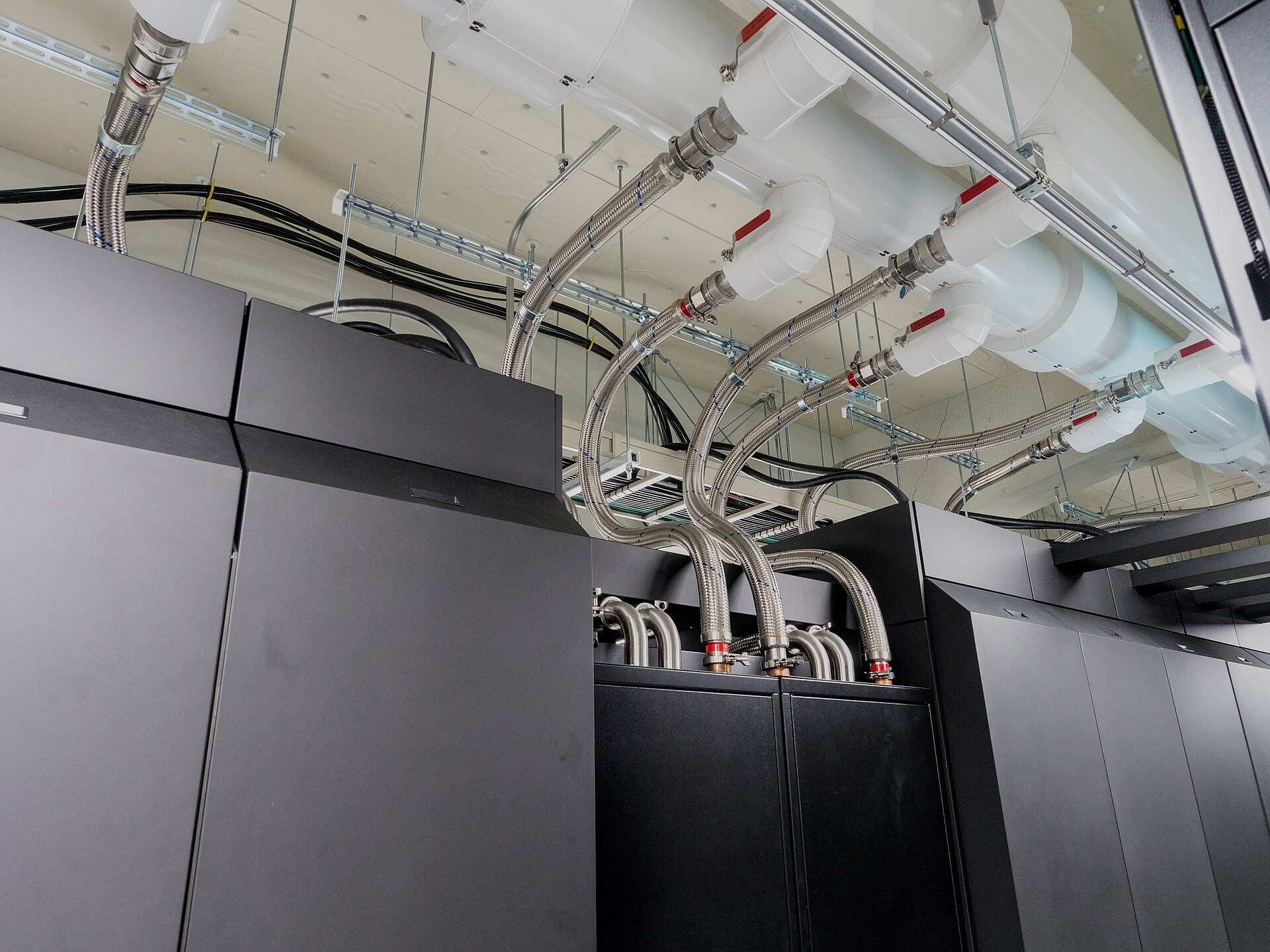
Hardware lifecycle and replacement intervals
The operational lifespan of liquid cooling hardware in high-density compute environments depends directly on mechanical wear and thermal duty cycles. Primary mechanical components, including coolant distribution units (CDUs), primary circulating pumps, and secondary rack-level manifolds, exhibit baseline design lifespans between 5 and 10 years under standard thermal loads. However, continuous operation under elevated compute temperatures accelerates seal degradation, impeller erosion, and elastomer fatigue. Moving from rigid, calendar-based replacement schedules to real-time predictive maintenance models can extend equipment lifespan by 20 to 40 percent, aligning overhaul interventions with actual component degradation rather than arbitrary runtime thresholds.
Component wear profiles across cooling topologies
Mechanical components in direct-to-chip (DLC) and immersion systems experience distinct physical stresses. In direct-to-chip deployments, circulating pumps operate against dynamic hydraulic loops where flow velocity, microchannel plate resistance, and pressure differentials dictate mechanical longevity. Immersion cooling systems, by contrast, subject pumps and heat exchangers to dielectric fluids with higher kinematic viscosities, altering hydrodynamic shear on impellers and internal gaskets. Choosing between these liquid cooling methods requires assessing the mechanical replacement cycles of each sub-assembly.
| Sub-assembly | Standard calendar replacement | Predictive service lifespan | Dominant degradation mechanism |
|---|---|---|---|
| Primary CDU centrifugal pumps | 4 to 6 years | 7 to 9 years | Bearing fatigue, seal degradation, impeller cavitation |
| Quick-disconnect couplings (QDCs) | 3 to 5 years | 5 to 7 years | O-ring embrittlement, mechanical latch wear |
| Rack manifolds and distribution hoses | 5 to 8 years | 8 to 10 years | Polymer leaching, micro-cracking, joint fatigue |
| Cold plate microchannels | 5 to 7 years | 7 to 10 years | Particulate clogging, surface erosion, galvanic oxidation |
Implementing continuous telemetry on pump vibrations, differential pressures across filtration stages, and flow rates allows facility operators to safely defer hardware replacements until measurable degradation thresholds are reached, lowering total lifecycle capital expenditure.
Cooling fluid degradation and expiration
Cooling fluids do not fail instantaneously; they experience progressive chemical and dielectric degradation under thermal and oxidative stress. In single-phase immersion cooling systems, synthetic hydrocarbon dielectric fluids exhibit high baseline thermal stability. Submer evaluated Shell immersion cooling fluids using the IEC 61125 accelerated oxidation method, exposing samples to 120 degrees Celsius with injected oxygen over 500 hours, a regime the company describes as simulating 14 years of aging relative to typical immersion operating temperatures of up to 60 degrees Celsius[1]. At the end of that test, Submer reported that the Shell fluids showed acidity levels of less than 50 percent, and a loss factor of less than 10 percent, of those measured for typical synthetic immersion fluids[1].
Critical chemical parameters: Total Acid Number and Loss Factor
Fluid replacement schedules are governed by chemical degradation markers rather than elapsed time. Two primary parameters dictate whether a cooling fluid remains operational or requires reclamation:
- Total Acid Number (TAN): Measures the accumulation of acidic oxidation byproducts in milligrams of potassium hydroxide per gram of fluid (mg KOH/g). Elevated TAN values indicate oxidative breakdown, which can lead to corrosive interaction with exposed server components and elastomeric seals.
- Dielectric Dissipation Factor (DDF / Loss Factor): Quantifies conductive contaminant accumulation and polar degradation products within the fluid. A rising loss factor signals reduced electrical resistivity and impaired dielectric insulation, increasing the risk of stray currents across active compute boards.
- Water-glycol moisture and inhibitor depletion: In closed-loop direct-to-chip systems using treated water-glycol mixtures, corrosion inhibitors (such as azoles and molybdates) deplete over 2 to 4 years, requiring chemical replenishment or complete fluid exchange to prevent galvanic corrosion.
While water-glycol loops in direct-to-chip systems generally require fluid testing every 6 months and complete replacement every 3 to 5 years, high-purity dielectric hydrocarbons in sealed immersion tanks can maintain operational integrity for a decade or longer when maintained within acceptable thermal envelopes.
Failure rates and downtime risks
Liquid cooling infrastructure introduces hydraulic complexity into the compute white space, altering the failure profile compared to legacy air-cooled facilities. The primary failure modes include mechanical pump seizure, gradual thermal interface material (TIM) pump-out or degradation, particulate blockages in cold plate microchannels, and fluid leakage at connection joints. Operating high-density accelerator clusters requires understanding these operational risks, because as Schneider Electric puts it, a single cooling failure in a high-density AI data center can trigger thermal runaway in seconds[2].
Mitigating downtime through continuous telemetry
Schneider Electric puts the benefit of condition-based and predictive maintenance at a 30 to 50 percent reduction in unplanned downtime, alongside maintenance cost savings of 18 to 25 percent against traditional calendar-based approaches[2]. Telemetry systems detect subtle drops in pressure, micro-leak conductive traces, and localized temperature spikes across manifolds before thermal thresholds trigger automated emergency compute throttling or server shutdown.
- Thermal Interface Degradation: Thermal paste and phase-change materials undergo pump-out and dry-out cycles over 2 to 4 years, resulting in higher thermal resistance between the silicon die and the copper cold plate.
- Mechanical Pump Cavitation and Bearing Wear: Flow restrictions or improper loop priming cause vapor bubble collapse, degrading impellers and creating acoustic signatures detectable through vibration analysis.
- Micro-leak Formation at Quick Disconnects: Elastomer hardening and thermal cycling stress connection points, requiring redundant drip containment and optical or conductive leak sensing ropes.
- Microchannel Flow Maldistribution: Accumulation of biological growth or corrosion particulates restricts flow through 50-micron cold plate fins, inducing localized overheating on compute cores.
Redundant pump configurations (such as N+1 or 2N CDU loops) combined with automated isolation valves ensure that single-component mechanical failures do not cascade into cluster-wide outages.
Predictive maintenance and system testing
Ensuring a liquid cooling system reaches its maximum theoretical lifespan requires replacing periodic manual inspections with automated, multi-parameter predictive testing. Modern facility operators monitor physical, thermal, and chemical telemetry to detect degradation trends weeks before an operational threshold is breached.
Core monitoring and diagnostic methodologies
Predictive maintenance frameworks incorporate continuous sensor arrays across the hydraulic loop alongside structured periodic laboratory testing, aligning with thermal management guidelines published by ASHRAE:
- Vibration analysis on rotating machinery: Accelerometers mounted on CDU pumps and secondary distribution motors detect bearing eccentricity, imbalance, and cavitation frequencies prior to mechanical failure.
- Thermographic manifold scanning: Infrared sensors and thermal imaging cameras monitor distribution manifolds and cold plate supply lines, identifying flow imbalances, air pockets, or localized bypasses.
- Chemical and dielectric fluid sampling: Periodic laboratory testing measures particle count, Total Acid Number, moisture content, and dielectric breakdown voltage to track fluid stability against the supplier's replacement thresholds.
- Differential pressure monitoring: High-precision delta-P transmitters across inline filtration units signal particulate loading and filter cake buildup before pump head pressure degrades.
Automated PLC (Programmable Logic Controller) systems integrate these sensor feeds to dynamically modulate pump rotational speeds, balance secondary loop flows, and alert facility engineering teams to schedule targeted maintenance without interrupting active AI workloads.
Efficiency gains versus capital investment
Evaluating the economic lifespan of liquid cooling infrastructure requires balancing substantial upfront capital expenditure (CAPEX) against ongoing operational energy reductions (OPEX). High-density AI deployments running accelerator clusters exceed the thermal dissipation limits of conventional air cooling, making liquid infrastructure a technical necessity rather than solely an efficiency upgrade.
Cooling energy reduction and facility metrics
According to the International Energy Agency Energy Efficient End-use Equipment (IEA-4E) platform, implementing liquid cooling technologies can reduce facility-level cooling energy by 30 to 40 percent compared to standard air-chilled systems[3]. Direct heat capture at the chip level allows data centers to operate secondary cooling water at elevated temperatures (35 to 45 degrees Celsius), enabling year-round compressor-free dry cooling and significantly improving facility Power Usage Effectiveness (PUE).
| Cooling architecture | Typical facility PUE | Cooling energy share | Relative deployment CAPEX |
|---|---|---|---|
| Conventional chilled-water air cooling | 1.30 to 1.50 | 25% to 35% | Baseline (1.0x) |
| Direct-to-chip liquid cooling (hybrid) | 1.15 to 1.25 | 12% to 18% | 1.25x to 1.45x |
| Single-phase immersion cooling | 1.05 to 1.10 | 5% to 8% | 1.35x to 1.60x |
| Two-phase immersion cooling | 1.02 to 1.06 | 3% to 5% | 1.70x to 2.10x |
While initial deployment costs for fluid distribution networks, CDUs, and specialized manifold piping are 25 to 60 percent higher than traditional raised-floor air systems, the reduction in fan parasitic power and chiller electricity consumption yields operational payback periods typically ranging from 2.5 to 4.5 years under high compute utilization.
The impact of grid stability on continuous operation
The operational lifespan of liquid cooling infrastructure depends fundamentally on the reliability of the electrical grid supplying the facility. The International Energy Agency reports that electricity demand from data centres soared by 17 percent in 2025, with AI-focused facilities climbing even faster and well outpacing global electricity demand growth of 3 percent, placing rising demands on regional power systems[4]. Voltage sags, frequency deviations, and micro-outages create severe mechanical stress on variable frequency drives (VFDs), CDU pump motors, and electronic control valves, directly affecting component longevity.
European transmission system operators and frequency management
In Europe, datacenter operators rely on heavily regulated transmission system operators (TSOs) to maintain the power quality required for sensitive cooling control loops. Transmission grids operate to stringent availability standards, and TenneT runs the high-voltage networks carrying that load across the Netherlands and large parts of Germany[5]. Similarly, German TSO Amprion manages an 11,000-kilometer high-voltage transmission grid stretching from the North Sea to the Alps[6], providing the critical bulk transport backbone that powers dense industrial and datacenter hubs.
Continuous cooling operations require precise grid synchronization. Grid operators such as 50Hertz use balancing measures to compensate for fluctuations and keep the frequency of the European interconnected grid as close as possible to its target value of 50 hertz, which requires consumption and generation to match at all times[7]. Frequency deviations beyond statutory tolerance bands trigger automated frequency containment reserves to prevent harmonic distortion and voltage fluctuations from disrupting sensitive pump electronics and variable-speed drives.
As facilities navigate expanding grid connection queues across European hubs, integrating robust uninterruptible power supply (UPS) backups and automated power conditioning systems remains essential to protect liquid cooling mechanical hardware from electrical transients, ensuring full operational lifespans across multi-year AI compute deployments.
Frequently asked questions
How often should a data center liquid cooling system be replaced?
Mechanical components like pumps and CDUs typically require replacement over a 5 to 10 year cycle
Does immersion cooling fluid expire?
Dielectric fluids degrade over time, but modern solutions are highly stable. Accelerated oxidation tests by Submer indicate that specialized immersion cooling fluids can remain stable for a simulated 14 years without needing replacement.
What causes a direct-to-chip cooling system to fail?
Common failure modes include mechanical pump wear, leaks, and thermal interface degradation
Is liquid cooling more energy efficient than air cooling?
Yes. Liquid cooling targets heat directly at the chip, which can reduce facility-level cooling energy consumption by 30 to 40 percent compared with standard air-chilled systems.
Why is grid stability important for liquid cooling?
Liquid cooling systems require continuous power to operate pumps and distribution units. They rely on high-voltage grid operators, such as TenneT and Amprion, to prevent power fluctuations that could cause thermal runaway
Sources
Rankings and scores on Optinest cannot be bought — no commercial relationship changes how a provider is assessed. How we score
Related reading
All Energy →How risky is liquid cooling
When asking how risky is liquid cooling, buyers must evaluate operational downsides, fluid maintenance costs, and data center total cost of ownership.

Is liquid cooling worth it: cost, risk and when payback closes
Is liquid cooling worth it? Dated figures on data centre liquid cooling cost, density, PUE and retrofit risk, plus a test for when payback closes.

Air cooling data centers: where it works and where it stops
Air cooling data centers: the measured rack-density limits, ASHRAE temperature classes and the criteria for choosing air, hybrid or liquid cooling.
