EU AI Act fines reach 7% of global turnover
An analytical guide to EU AI Act fines and enforcement. Learn how penalty tiers reach up to 35 million EUR and which authorities oversee market compliance.
In this article8
- EU AI Act enforcement architecture and authorities
- The 35 million EUR tier: Penalties for prohibited practices
- The 15 million EUR tier: High-risk AI obligations
- The 7.5 million EUR tier: Incorrect or misleading information
- The role of national Data Protection Authorities
- Infrastructure choices and managing fine exposure
- Frequently asked questions
- Sources
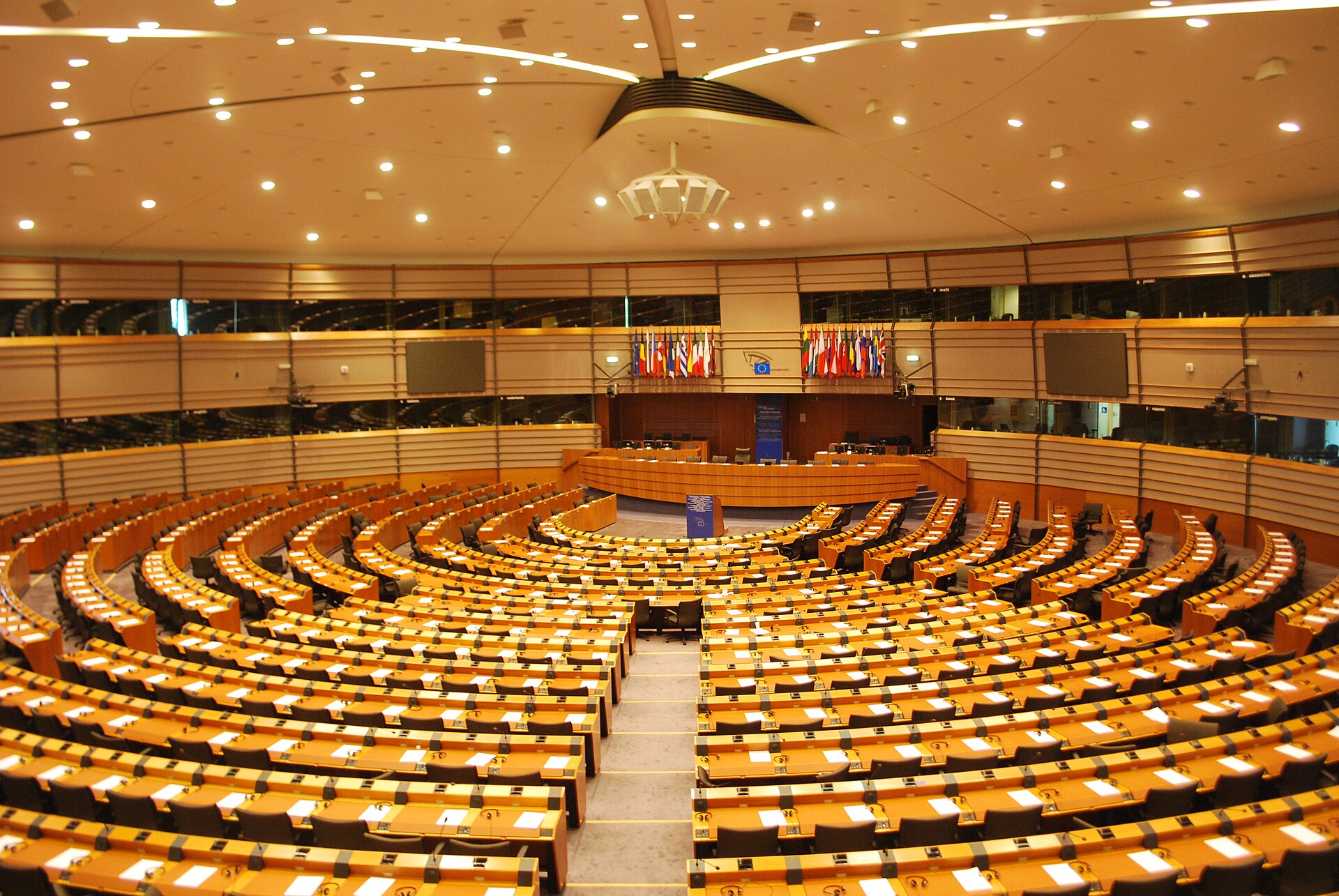
EU AI Act enforcement architecture and authorities
Regulation (EU) 2024/1689 establishes a harmonized governance framework across the European Union, dividing regulatory supervision between Union-level bodies and national competent authorities that each member state must designate: at least one notifying authority and at least one market surveillance authority[1]. The institutional design assigns distinct responsibilities based on the classification of the artificial intelligence technology and its systemic footprint, with the Commission's AI Office and the national market surveillance authorities sharing implementation and enforcement duties[2].
At the European Union level, the European Commission's AI Office, established within the Directorate-General for Communications Networks, Content and Technology (DG CONNECT), serves as the central enforcement body for general-purpose AI (GPAI) models. The AI Office investigates possible infringements, including requests for technical documentation and access to models to assess their capabilities, and can require corrective action, restrict a model's availability, or issue direct fines for non-compliance[3]. For downstream AI systems integrated into designated Very Large Online Platforms (VLOPs) or Very Large Online Search Engines (VLOSEs), the AI Office also maintains direct supervisory jurisdiction in coordination with the Digital Services Act enforcement apparatus.
Supervision of all other artificial intelligence deployments falls under the jurisdiction of national competent authorities designated by individual member states. Each member state must designate at least one notifying authority and at least one market surveillance authority responsible for auditing deployers, verifying compliance with binding AI Act obligations, and imposing financial sanctions under national procedural law.
- European Commission AI Office: Direct Union-wide supervision, investigative authority, and sanctioning powers over general-purpose AI models and systemic GPAI providers.
- National Market Surveillance Authorities: Member state enforcement bodies responsible for high-risk AI audits, workplace deployments, public-sector systems, and local market surveillance.
- European Data Protection Supervisor (EDPS): Dedicated supervisory authority enforcing AI Act compliance across European Union institutions, bodies, offices, and agencies.
The 35 million EUR tier: Penalties for prohibited practices
Article 99(3) of Regulation (EU) 2024/1689 sets the highest statutory penalty ceiling under the AI Act for non-compliance with the prohibited AI practices codified in Article 5[4]. Enterprises engaging in banned applications face administrative fines of up to 35 000 000 EUR or, where the offender is an undertaking, up to 7% of their total worldwide annual turnover for the preceding financial year, whichever is higher[4]. That 7% ceiling is reserved for this top tier; the lower tiers set out below carry smaller ceilings.
Prohibited practices represent applications deemed unacceptable due to their contravention of fundamental European rights and safety standards. Article 5 bans manipulative or deceptive techniques that materially distort behaviour and cause significant harm, exploitation of vulnerabilities linked to age, disability or socio-economic situation, untargeted scraping of facial images from the internet or CCTV footage to build facial recognition databases, emotion inference in workplaces and educational institutions, social scoring based on social behaviour or personal characteristics, and biometric categorisation systems inferring sensitive attributes such as political opinions, religious beliefs or sexual orientation[5].
| Sanction Category | Statutory Reference | Maximum Fine (Standard Enterprise) | Maximum Fine (SMEs and Start-ups) |
|---|---|---|---|
| Prohibited AI Practices | Article 99(3) | The higher of 35 000 000 EUR or 7% of total worldwide annual turnover | The lower of those two amounts, per Article 99(6) |
| High-Risk AI and Transparency Breaches | Article 99(4) | The higher of 15 000 000 EUR or 3% of total worldwide annual turnover | The lower of those two amounts, per Article 99(6) |
| Incorrect or Misleading Information | Article 99(5) | The higher of 7 500 000 EUR or 1% of total worldwide annual turnover | The lower of those two amounts, per Article 99(6) |
Under Article 99(6), the regulation establishes a protective threshold for small and medium-sized enterprises (SMEs), including start-ups: each fine is capped at the lower of the two applicable amounts, the fixed sum or the turnover percentage[4]. That prevents financial sanctions from causing disproportionate enterprise insolvency.
The 15 million EUR tier: High-risk AI obligations
The secondary sanction tier, governed by Article 99(4), establishes penalties for non-compliance with the core operating obligations required for high-risk AI systems and transparency mandates[4]. Standard corporate operators face fines of up to 15 000 000 EUR or up to 3% of total worldwide annual turnover for the preceding financial year, whichever is higher.
This penalty tier applies across the entire supply chain, penalizing distinct failures by providers, deployers, authorized representatives, importers, and distributors. Sanctions apply directly to violations of provider obligations under Article 16 (including risk management systems, data governance, technical documentation, and record-keeping), deployer obligations under Article 26 (including operational monitoring and fundamental rights impact assessments), and transparency rules under Article 50 (such as notifying individuals of AI interactions and labeling synthetic content or deepfakes)[4].
- Article 16 Provider Breaches: Failure to implement continuous risk management frameworks, quality management systems, or post-market monitoring.
- Article 26 Deployer Breaches: Operating high-risk systems outside intended instructions or neglecting mandatory input data governance.
- Article 50 Transparency Breaches: Omitting machine-readable disclosure markings on synthetic media, text outputs, or deepfake audio-visual assets.
- Article 101 General-Purpose AI Breaches: Failure by GPAI model providers to supply requested documents or information, to comply with a measure requested by the Commission, or to grant model access for evaluation[6].
Under Article 101, the European Commission is empowered to fine providers of general-purpose AI models up to 3% of their annual total worldwide turnover in the preceding financial year or 15 000 000 EUR, whichever is higher, where the provider intentionally or negligently infringes the regulation, fails to comply with a request for documents or information, fails to comply with a requested measure, or denies the Commission access to the model for evaluation[6].
The 7.5 million EUR tier: Incorrect or misleading information
Article 99(5) defines the third penalty tier, covering the supply of incorrect, incomplete or misleading information to notified bodies or national competent authorities in reply to a request. Infringements in this category carry maximum administrative fines of up to 7 500 000 EUR or up to 1% of total worldwide annual turnover for the preceding financial year, whichever is higher[7].
This tier ensures that regulatory bodies, market surveillance authorities, and notified conformity assessment bodies can rely upon accurate disclosures during formal inquiries and conformity evaluations. Both providers and deployers are subject to this sanction whenever they respond to official Requests for Information (RFIs) with deceptive data, conceal model training architectures, or omit relevant safety test logs.
- Issuance of Formal RFI: The AI Office or a national competent authority issues an official inquiry requiring specific technical logs, documentation, or model parameters.
- Submission Verification: The regulatory authority audits the submitted materials against technical baselines and empirical evaluations.
- Sanction Assessment: If documentation is found to be intentionally falsified, withheld, or substantively incomplete, administrative proceedings under Article 99(5) or Article 101 are initiated.
For SMEs and start-ups, Article 99(6) applies the proportionality safeguard here too, capping any fine at the lower of 7 500 000 EUR and 1% of total worldwide annual turnover[4].
The role of national Data Protection Authorities
The enforcement structure of the AI Act integrates closely with existing European privacy oversight, and the European Data Protection Board has recommended that member states designate their national Data Protection Authorities (DPAs) as market surveillance authorities for high-risk AI systems[8]. Because high-risk AI deployments frequently process personal data at scale, supervisory responsibilities overlap between the General Data Protection Regulation (GDPR) and the AI Act.
The European Data Protection Board (EDPB) coordinates supervisory consistency across the European Union and has set out how DPAs should cooperate with market surveillance authorities on information sharing and joint procedures[9]. In France, the Commission Nationale de l'Informatique et des Libertés (CNIL) has publicly backed that allocation of responsibility and points to its own expert department and action plan on AI supervision[10]. In Ireland, the Data Protection Commission (DPC) explains that under the GDPR one-stop-shop mechanism the supervisory authority of the member state where an organisation has its main establishment acts as its lead supervisory authority, which places many Dublin-headquartered technology platforms under Irish oversight[11].
- France (CNIL): Runs a dedicated AI expert department and an action plan on AI deployment, and supports DPAs taking responsibility for high-risk AI systems[10].
- Ireland (DPC): Under the GDPR one-stop-shop mechanism, the authority of the member state hosting an organisation's main establishment acts as its lead supervisory authority, which brings many Dublin-based cloud and AI developers under the DPC[11].
- European Data Protection Board (EDPB): Recommends that DPAs be designated as market surveillance authorities for high-risk AI to keep interpretation consistent and avoid duplicated enforcement[8].
Where an AI deployment breaches both GDPR provisions and AI Act operational standards, national authorities must ensure that sanctions remain proportional without violating the principle against double jeopardy for identical underlying conduct GDPR compliance.
Infrastructure choices and managing fine exposure
Mitigating exposure to AI Act penalties requires corporate buyers and technical architects to evaluate infrastructure architecture alongside legal compliance workflows. Organizations processing sensitive workloads increasingly assess data sovereignty and geographical hosting parameters to minimize data governance risks and cross-border regulatory conflicts.
European infrastructure providers offer localized computing environments designed to keep inference pipelines within EU territorial boundaries.
However, technical infrastructure hosting alone does not confer AI Act compliance. Managing regulatory risk demands rigorous technical documentation, verifiable input data pipelines, continuous human oversight, and active adherence to the statutory requirements established across all penalty tiers.
Frequently asked questions
What is the maximum fine under the EU AI Act?
The highest penalty tier applies to prohibited AI practices and can reach up to 35 million EUR or 7% of a company's total worldwide annual turnover for the preceding financial year, whichever figure is higher.
Who enforces the EU AI Act?
Enforcement is split between the European Commission and member states. The AI Office supervises general-purpose AI models, while national competent authorities oversee other AI systems in their respective jurisdictions.
How are SMEs treated regarding AI Act penalties?
The AI Act specifies that fines for small and medium enterprises (SMEs) and start-ups are capped at whichever amount is lower between the fixed monetary ceiling and the turnover percentage.
Does the GDPR still apply to AI systems?
Yes. AI systems that process personal data must still comply fully with the GDPR. Data protection authorities can enforce both frameworks simultaneously, leading to parallel regulatory scrutiny.
What is the penalty for giving incorrect information to regulators?
Under Article 99, providing incorrect, incomplete, or misleading information to notified bodies or national authorities can result in administrative fines up to 7.5 million EUR or 1% of global turnover.
Sources
Rankings and scores on Optinest cannot be bought — no commercial relationship changes how a provider is assessed. How we score
Related reading
All Regulation →EU AI Act fines: Penalty tiers and enforcement explained
Understand the EU AI Act fines and enforcement timeline. A breakdown of the penalty tiers, the SME proportionality rule, and the enforcing authorities.

AI Act enforcement: who fines whom, how much and from when
Who enforces the EU AI Act, the four fine tiers from EUR 7.5 million to EUR 35 million, and which dates apply after Regulation (EU) 2026/1744.

US semiconductor export controls: AI chip compliance
An analytical guide to US semiconductor export controls. Learn how the 2026 BIS update impacts AI chip compliance, tariffs and European infrastructure.
