Europe's colocation market runs into the grid
Evaluate the Europe data center colocation market, compare providers, and examine how grid regulations and managed GPU alternatives impact your TCO.
In this article8
- What is the Europe data center colocation market?
- Leading colocation providers in Europe
- How grid and energy rules are changing the market
- What are the disadvantages of colocation?
- Is data center colocation cheaper than cloud infrastructure?
- Colocation versus managed GPU clusters
- Frequently asked questions
- Sources
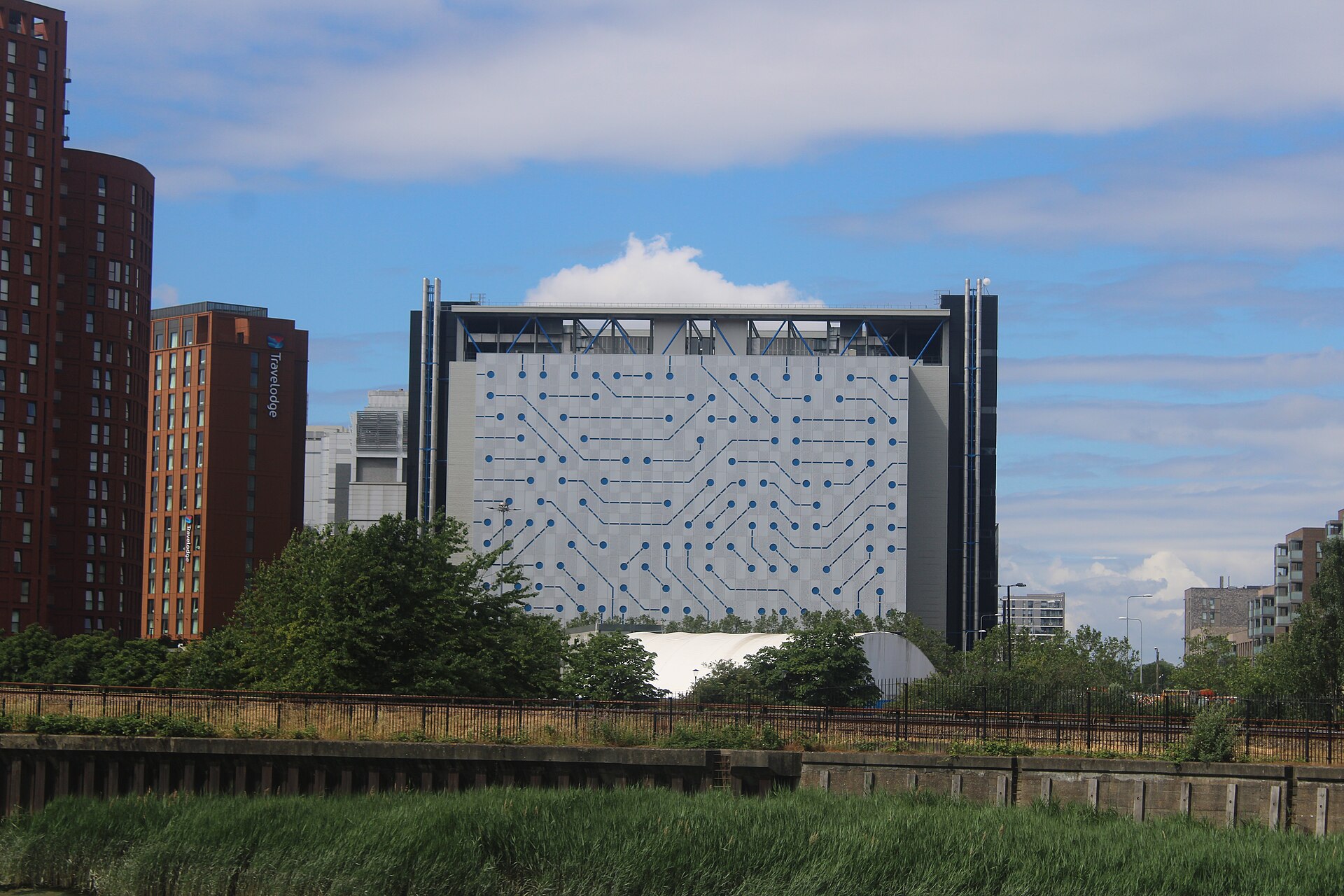
What is the Europe data center colocation market?
Data center colocation is a commercial provisioning model where third-party facility operators lease physical space, electrical power, and cooling infrastructure to enterprise and cloud tenants who deploy and operate their own server hardware. The European data center colocation market was valued at USD 9.45 billion in 2024 and is projected to reach USD 35.73 billion by 2030, representing a compound annual growth rate of 24.82%[1]. This expansion reflects the broader growth captured in EU data center statistics, driven primarily by high-density artificial intelligence training and inference workloads.
Wholesale versus retail colocation models
The market operates across two primary models based on capacity scale and contract structure, as detailed in our analysis of wholesale vs retail colocation. Retail colocation provides individual server racks or caged suites (typically below 500 kW) with shared environmental systems, catering to enterprise IT workloads. In contrast, wholesale colocation leases dedicated data halls or entire multi-megawatt facilities to hyperscale cloud providers and AI platform operators requiring multi-year capacity reserves.
| Operating Attribute | Retail Colocation | Wholesale Colocation |
|---|---|---|
| Capacity threshold | Individual racks to caged suites (< 500 kW) | Dedicated halls or facilities (1 MW to 50+ MW) |
| Target tenant | Enterprise IT, regional systems integrators | Hyperscalers, AI model developers, large enterprises |
| Contract duration | 1 to 3 years | 5 to 15 years |
| Cooling approach | Standard perimeter CRAC/CRAH air cooling | Dedicated chilled-water loops, liquid-to-chip manifolds |
The transition from conventional enterprise IT to accelerated computing has shifted architectural requirements. Standard enterprise server cabinets traditionally drew between 4 kW and 8 kW per rack. Modern AI accelerator clusters require between 40 kW and 100 kW per rack, necessitating direct liquid cooling manifolds and specialized electrical distribution that older colocation facilities cannot support without extensive structural retrofits.
Leading colocation providers in Europe
The European colocation landscape combines global hyperscale developers with regional operators focused on specific geographic and operational advantages. Digital Realty, Equinix, NTT DATA, Global Switch, CyrusOne, and Ark Data Centres are among the largest contributors to European colocation revenue, and Western Europe alone is expected to absorb around 70.48% of forecast European colocation investment, ahead of the Nordics and Central and Eastern Europe[1].
Provider profiles and operational differentiation
Colocation operators differentiate their facilities across standard enterprise configurations and custom hyperscale designs. CyrusOne develops large-scale wholesale campuses tailored to hyperscalers with high-density cooling requirements. Regional operators offer distinct structural characteristics: EcoDataCenter operates facilities in Sweden utilizing wood-frame construction and district heat export, while maincubes operates Tier III and Tier IV facilities across Germany and the Netherlands with high-availability power architectures.
- CyrusOne: Hyperscale campus operator delivering custom multi-megawatt builds across European primary hubs.
- EcoDataCenter: Nordic operator utilizing sustainable timber infrastructure and industrial heat reuse integration.
- maincubes: European operator providing high-security colocation across Frankfurt and Amsterdam corridors.
- Equinix and Digital Realty: Global carrier-neutral operators providing extensive interconnection fabrics and international exchange points.
Regardless of facility design, grid access is a gating factor, and the connection route depends on the size of the load rather than on the operator. In Ireland, for example, facilities with a total forecast demand of 20 MVA or above at a single location must submit a formal application to the transmission system operator EirGrid, while smaller loads apply to the distribution operator ESB Networks[2]. In key hubs, facility expansion is governed primarily by transmission capacity allocations rather than physical land availability.
How grid and energy rules are changing the market
Regulatory frameworks across the European Union are shifting from annual renewable guarantees of origin toward strict hourly matching and physical grid support requirements. In Spain, draft legislation approved in 2026 requires data centers with a capacity of 1 MW or higher to source at least 80 percent of their electricity consumption from new renewable generation on an hourly basis[3]. The Spanish framework also requires operators to match new capacity with equivalent renewable generation installed within 18 months prior to facility commissioning.
Transmission constraints and connection thresholds
National grid operators have introduced stringent connection criteria to protect transmission stability. In Ireland, transmission system operator EirGrid published its Data Centre Connection Offer Process and Policy Version 3 in May 2026, implementing the Commission for Regulation of Utilities decision on large energy user connection policy (CRU/2025236)[4]. Under EirGrid's connection rules, larger demand connections of 20 MVA or above must submit formal applications directly to EirGrid rather than local distribution networks, subject to maximum import capacity assessments and dispatchable on-site generation mandates.
| Regulatory Jurisdiction | Primary Authority | Capacity Threshold | Key Policy Mandate |
|---|---|---|---|
| Spain (National) | Ministry for the Ecological Transition | Facilities >= 1 MW | 80% hourly renewable sourcing from new assets |
| Ireland (National) | EirGrid / CRU | Connections >= 20 MVA | Direct TSO application under DCCOPP Version 3 |
| European Union (General) | European Commission | Facilities >= 500 kW | Mandatory energy and water efficiency reporting |
These regulatory requirements have compounded transmission bottlenecks, creating extended grid connection queues across both primary FLAP-D hubs (Frankfurt, London, Amsterdam, Paris, Dublin) and secondary markets. Power availability, rather than land or capital, is now widely described as the defining constraint on data center development across the EMEA region, with Ireland, Germany and the UK singled out for acute grid constraints[5].
What are the disadvantages of colocation?
While colocation provides dedicated physical tenancy, it imposes substantial capital commitments and ongoing operational overhead on the purchasing organization. Tenants must procure, configure, rack, cable, and maintain all computational hardware, networking switches, and storage appliances independently. Hardware lifecycle management requires continuous engineering resources for firmware upgrades, failed component replacements, and asset decommissioning every three to five years.
Power distribution and thermal management challenges
Deploying modern AI hardware in colocation facilities introduces complex power and thermal constraints. Next-generation accelerator architectures demand unprecedented electrical delivery at the rack level. To overcome the efficiency and busbar thickness limits of standard 12V or 48V power distribution, the Open Compute Project (OCP) is establishing 800 VDC as an open power architecture for AI infrastructure[6]. Retrofitting older colocation space to support 800 VDC distribution requires custom power equipment and significant tenant-side capital expenditure.
- Capital lock-in: Full upfront payment for servers, networking fabrics, and optical transceivers prior to workload deployment.
- Thermal retrofitting: Air-cooled colocation facilities cannot support multi-node GPU clusters without installing secondary liquid cooling loops and coolant distribution units (CDUs).
- Rigid capacity planning: Contracts require reserving power capacity based on peak estimated load, resulting in ongoing utility charges for unutilized headroom.
- Logistical complexity: Hardware maintenance and replacement part delivery must comply with facility security clearance protocols and remote-hands SLAs.
Is data center colocation cheaper than cloud infrastructure?
Evaluating whether colocation is cheaper than cloud infrastructure depends on workload duty cycles, capacity utilization, and capital expenditure amortization over time. Colocation models assume predictable, constant server utilization where fixed hardware depreciation and steady power charges yield lower hourly compute costs than public cloud on-demand rates.
The cost impact of server utilization and idle capacity
According to the Uptime Institute Global Data Center Survey, average server rack power densities across enterprise facilities remain below 8 kW, and most facilities still have no racks above 30 kW[7]. Uptime's researchers note that designing for AI-scale density without the matching workload risks leaving capacity stranded, which is why more operators now stage power and cooling in phases[8]. When physical servers in a colocation suite sit idle between training batches or during engineering cycles, the effective cost per active compute-hour rises sharply, as base facility lease and hardware depreciation costs remain fixed.
| Cost Component | Colocation Model | Cloud / Managed Model |
|---|---|---|
| Upfront Capex | High (server purchases, optics, liquid manifolds) | Zero (pay-as-you-go or committed reservation) |
| Hardware refresh cycle | Tenant responsibility (every 3 to 5 years) | Provider responsibility (transparent upgrades) |
| Idle capacity penalty | High (fixed lease and depreciation continue) | Low (nodes deallocated or rented on demand) |
| Network egress costs | Direct carrier cross-connect fees | Provider bandwidth rates |
For continuous, steady-state baseline workloads running at sustained 80%+ utilization, owned colocation hardware can achieve a lower total cost of ownership over a 36-month horizon. For dynamic, bursting, or exploratory workloads, cloud and managed infrastructure avoids the financial penalty of unutilized hardware.
Colocation versus managed GPU clusters
For organizations deploying accelerated AI computing across Europe, managed GPU platforms represent a direct alternative to the procurement, racking, and maintenance cycle of traditional colocation. Rather than managing physical server inventory and liquid cooling loops in a leased data hall, teams can deploy managed compute across specialized AI infrastructure in Europe.
- Elimination of hardware capex: Organizations access H100, H200, and B200 accelerators without multi-million-euro hardware purchase orders or long procurement lead times.
- Zero physical maintenance: Thermal management, optical transceivers, node health monitoring, and hardware replacements are managed at the platform layer.
- Elastic cluster scaling: Compute capacity can be provisioned for dedicated multi-node training runs or scaled down to eliminate idle hardware overhead between development phases.
By provisioning managed GPU nodes on Slurm or Kubernetes, engineering teams bypass the two-year to five-year commitments and facility engineering requirements of traditional colocation, aligning infrastructure spending directly with active training and inference execution.
Frequently asked questions
What is the colocation market?
The data center colocation market provides leased physical space, power, and cooling for an enterprise's servers, eliminating the need to build a private facility. The European sector was valued at USD 9.45 billion in 2024.
Who are the largest colocation companies in Europe?
Major wholesale and retail providers operating across the continent include Equinix, Digital Realty, and CyrusOne, alongside regional specialists like Sweden's EcoDataCenter and Germany's maincubes.
What are the hidden costs of managing a private server rack?
Beyond the lease for space and power, organizations face substantial upfront capital expenditure for hardware and ongoing engineering overhead. Teams must manage their own server maintenance, driver troubleshooting, and hardware lifecycles rather than treating compute as an operational expense.
How are renewable energy regulations affecting European facilities?
Regulators are increasingly tying grid access to strict sustainability metrics. For example, Spain drafted rules requiring new data centers with a capacity of 1MW or more to source at least 80 percent of their electricity from new renewable generation on an hourly basis.
Does renting cloud compute save money compared to owning hardware?
The cost efficiency depends on workload utilization. While owning hardware can lower long-term costs for stable, constant processes, managed public cloud or specialized clusters are often cheaper for variable workloads because they eliminate hardware capital expenditure and unutilized idle time.
Sources
Rankings and scores on Optinest cannot be bought — no commercial relationship changes how a provider is assessed. How we score
Related reading
All Datacenters →Colocation is really two different purchases
Compare wholesale and retail colocation models. Evaluate pricing, capacity limits, grid constraints, and managed GPU alternatives for infrastructure.

LLM APIs with zero data retention: A provider comparison
Compare 7 LLM inference providers that offer zero data retention. Learn what each commitment covers and how to get API logging restrictions in writing.

Three operators hold a third of colocation
Compare the largest global and US colocation data center companies, evaluation criteria, and why AI workloads are shifting to managed GPU clusters.
